About Crane fly larvae
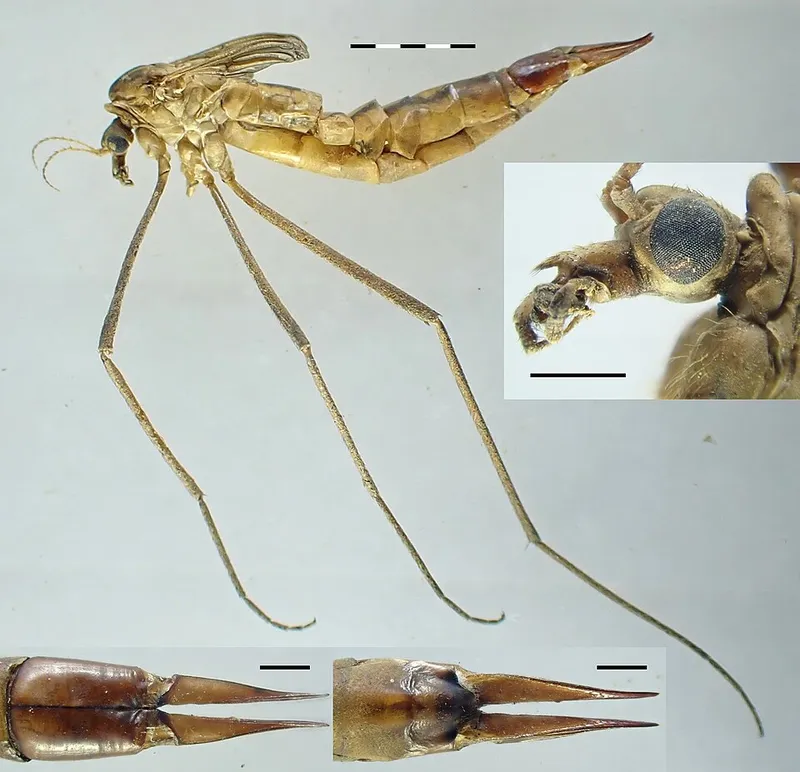
Crane flies are large, long-legged flies that look like outsized mosquitoes, adults have a wingspan of an inch or more, thread-thin legs, and a habit of blundering into lit windows in late summer and fall. They do not bite, do not sting, and do not feed as adults. The larvae are a different matter. Tipula larvae, often called leatherjackets for their tough, gray-brown, legless bodies, live in the soil and thatch layer where they feed on roots, stems, and decaying organic matter. In turf, root-feeding by large populations can thin and damage the stand, particularly during wet fall and early spring periods when larvae are most active near the surface.
Adults fly and lay eggs in turf from late August through October in Middle Tennessee. Eggs hatch quickly, and young larvae feed through fall before overwintering deeper in the soil. Feeding resumes in late winter and early spring as soils warm, with peak damage potential in March and April before larvae pupate. The damage shows as irregular thin or bare patches in spring that may initially be blamed on winter kill or disease. Digging into affected areas reveals the gray, cylindrical, up to an inch-and-a-half-long leatherjackets in the top inch or two of soil. Wet falls and wet springs favor large populations because eggs and young larvae survive better in moist soil conditions, and Middle Tennessee's subtropical humidity makes this a relevant consideration.
I'll be direct: crane fly larvae causing significant turf damage in Middle Tennessee residential lawns is a less common event than grub or armyworm damage. The European crane fly (Tipula paludosa) is a major turf pest in the Pacific Northwest; Tipula species that occur in the Southeast tend to cause lighter pressure on home lawns, particularly on taller-mown fescue. That said, when conditions align, a wet fall, dense thatch, a stressed lawn, larval populations can reach damaging levels.
The bee-safe chlorantraniliprole I apply in May as part of the standard treatment plan provides coverage against crane fly larvae that feed on root and shoot tissue. For spring population control, the existing insecticide residual from the prior year's application is a meaningful deterrent. If crane fly damage is suspected in spring, a targeted follow-up application timed to larval activity near the surface, typically March through April before pupation, is the most effective intervention.
Quick Facts
- Common Name
- Crane fly larvae
- Scientific Name
- Tipula spp.
- Category
- Turf Pest
- Region
- Middle Tennessee