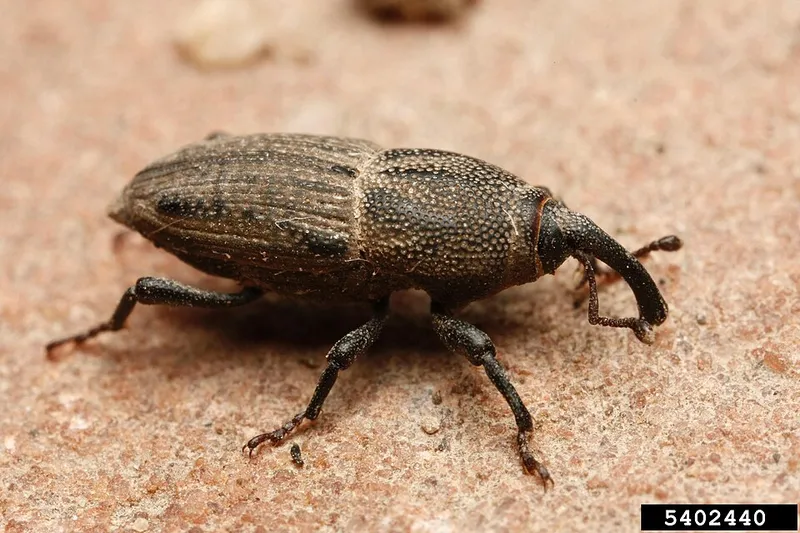
About Billbug
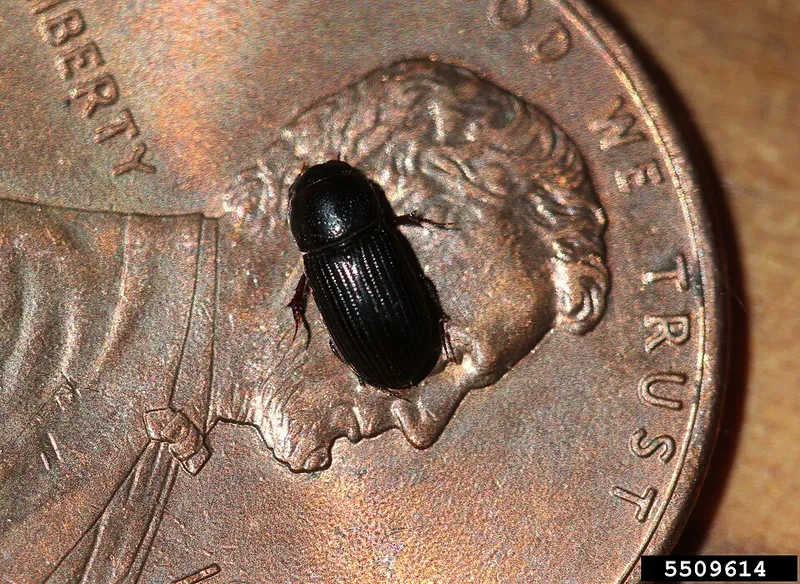
The Bluegrass Billbug (Sphenophorus parvulus) is a snout beetle that acts more like a stealth assassin than a typical turf pest. While most homeowners are looking for white grubs in the soil, billbugs start their destruction inside the grass stem itself. The adults are small, grey-to-black weevils with a distinctive 'snout' used for boring into the plant. The real damage, however, comes from the larvae, creamy white, legless grubs with a hard, reddish-brown head. These are much smaller than a Japanese beetle larva, but because of where they feed, they are lethal to fescue in our transition zone.
In the Middle Tennessee climate, adults emerge from the thatch layer as soon as soil temperatures stabilize in late spring. They lay eggs inside the leaf sheath, and once those larvae hatch, they tunnel their way down the center of the stem. This is the 'hollow-stem' phase. You can diagnose this in a Franklin or Columbia lawn using the 'stem pull' test: if you grab a handful of brown grass and it breaks off easily at the soil line with sawdust-like frass (waste) inside the hollowed-out stem, you have billbugs. Once they finish with the stem, they move down to the crown, the heart of the plant, and chew it out entirely. Once the crown is destroyed, the plant is dead. It will not recover with irrigation or fertilizer because the plant's vascular system has been severed.
I’ve been treating lawns along the I-65 corridor for a long time, and I’ll be direct: billbugs are relatively rare here compared to armyworms or standard grubs. I have seen a legitimate, lawn-destroying infestation exactly once, on a property in Spring Hill. They are easy to misdiagnose because the damage looks identical to drought stress or summer dormancy. Most people just turn up the sprinklers, which only keeps the thatch moist and allows the billbugs to thrive while the grass continues to die.
If you are on my standard treatment plan, you don't need to worry about billbugs. I include a high-end, bee-safe chemistry called chlorantraniliprole as a standard preventive application. We time this application for the spring window, typically April or May, so the plant tissue is fully protected before the larvae hatch. This chemistry is incredibly persistent; it stays in the plant and kills any insect that forages on the stems or roots. This is a core part of my compounding quality philosophy. By maintaining this coverage year after year, we build a residual defense that makes it impossible for billbug populations to get a foothold in your lawn. We don't use harsh rescue chemicals like Dylox because the preventive work ensures we never reach a crisis point.
Quick Facts
- Common Name
- Billbug
- Scientific Name
- Sphenophorus parvulus
- Category
- Turf Pest
- Region
- Middle Tennessee