About Tuliptree Scale
Tuliptree Scale
Identification: Toumeyella liriodendri · the largest soft scale on landscape trees in the eastern US. Mature females reach 10-12 mm, hemispherical, with distinctive orange, black, and gray mottled coloration. Infests tulip poplar (Liriodendron tulipifera) and magnolia (Magnolia spp.) exclusively. The large, colorful, dome-shaped females on bark are visually distinctive and diagnostic without magnification.
Life cycle: One generation per year in Middle Tennessee. Overwinters as second-instar nymphs on twigs and small branches. Nymphs resume feeding in spring; females mature and produce crawlers from July through September. Crawlers settle on leaves through summer, then migrate to bark in fall. Heavy honeydew production occurs throughout the feeding period.
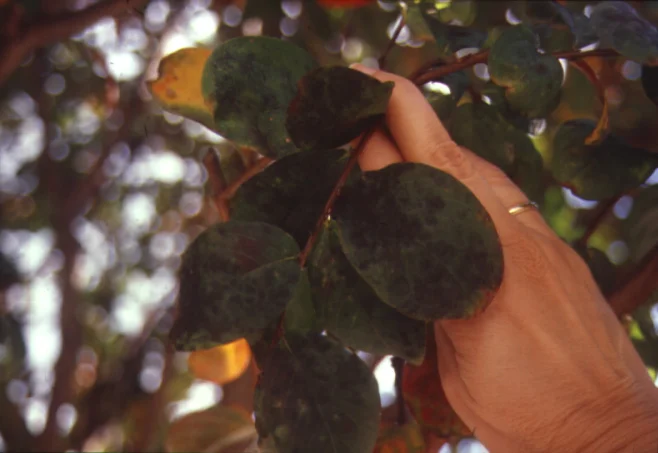
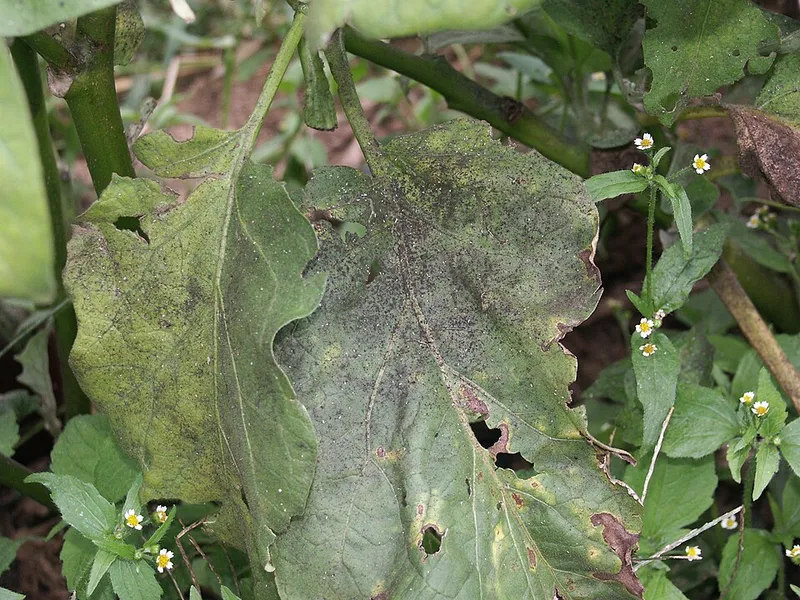
Damage signs: Copious honeydew drip, often more severe than any other scale in the Tennessee landscape. Sooty mold heavily coats foliage, pavement, and vehicles under large infested tulip poplars. Heavy infestations cause branch dieback, and in young trees or consecutive-year infestations, significant crown loss. Tulip poplar is a dominant canopy tree along the I-65 corridor; large residential specimens can produce alarming honeydew volumes.
Treatment window: At crawler emergence in July-August. A dormant oil application in late February kills overwintering nymphs and significantly reduces summer honeydew complaints.
UT-recommended approach: Dormant horticultural oil in late winter is the highest-leverage single treatment, reducing the overwintering nymph population before it matures to the high-honeydew adult stage. Systemic imidacloprid or dinotefuran soil drench or trunk injection applied in spring provides residual protection through the summer crawler period. Large trees are impractical to spray for crawler control, systemic applications are the standard professional approach.
Quick Facts
- Common Name
- Tuliptree Scale
- Scientific Name
- N/A
- Category
- Landscape Pest
- Region
- Middle Tennessee