About Southern Pine Beetle
Southern Pine Beetle
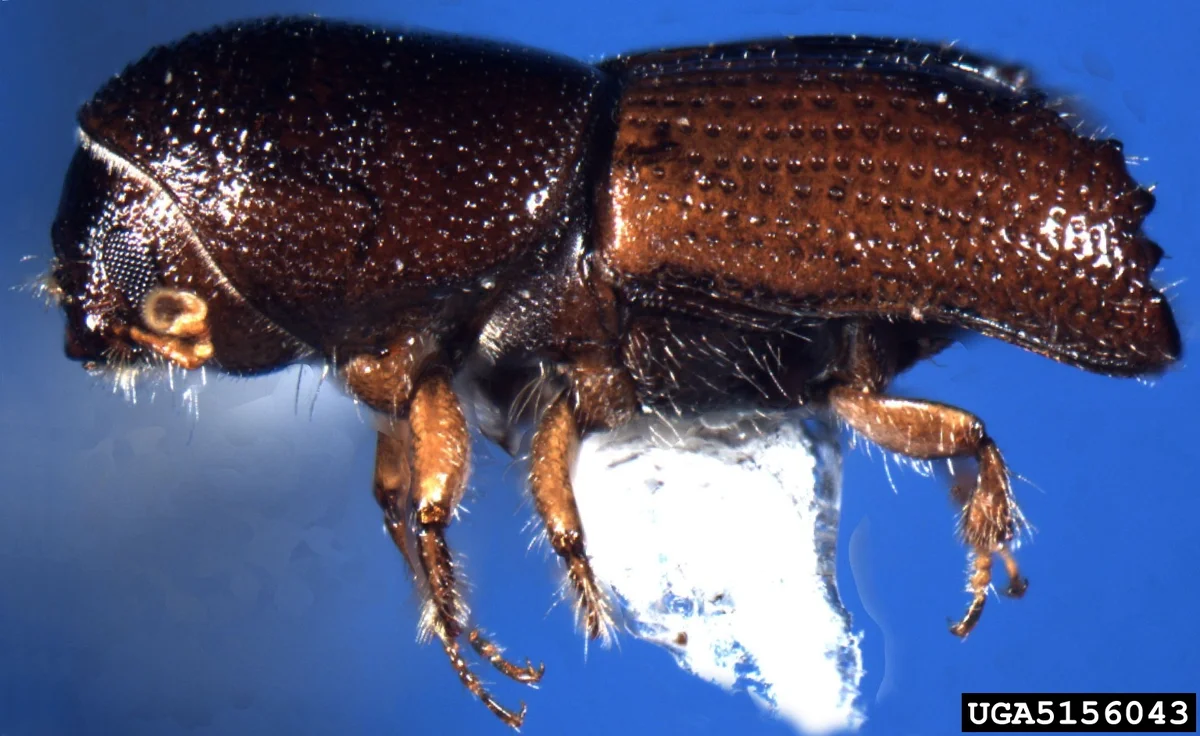
Identification: Adults are small, 2-4 mm, dark reddish-brown to black, with a rounded abdomen, the rounded posterior distinguishes them from the similarly sized Ips bark beetles, which have concave, spined posteriors. Infestations are identified by masses of white resin tubes (pitch tubes) on bark, reddish-brown boring dust in bark crevices, and characteristic S-shaped galleries under the bark. Hosts are primarily loblolly (Pinus taeda), shortleaf (P. echinata), and Virginia pine (P. virginiana), all common in Middle Tennessee landscapes and woodland edges.
Life cycle: Three to seven generations per year in Tennessee under favorable conditions. Adults emerge and attack stressed or recently weakened pines en masse, releasing aggregation pheromones that recruit additional beetles, mass attacks are what allow this species to overwhelm a tree's pitch defense. Overwinters as larvae or adults under bark. The entire cycle from egg to adult takes 35-60 days in summer, allowing rapid population buildup in drought years.
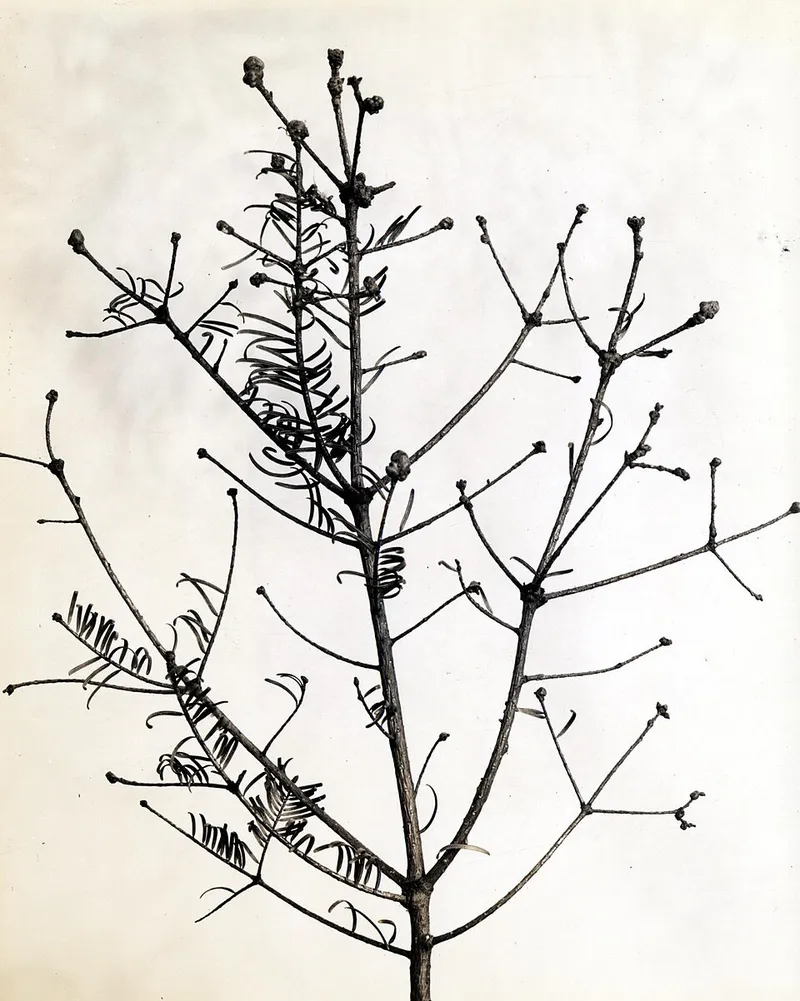
Damage signs: Pitch tubes on bark surface (cream to reddish-brown resinous masses at boring sites). Crown fading from green to yellow to reddish-brown, typically progressing from the top down over 2-4 weeks. Reddish-brown boring frass at the tree base. Blue-gray fungal staining in sapwood (carried by the beetle). Trees under drought stress, recently transplanted pines, or those with root damage from construction are primary targets.
Treatment window: Prevention before infestation. Once pitch tubes appear and mass attack has begun, treatment of the infested tree is not effective. Preventive treatments to adjacent high-value pines may be warranted when active spot infestations are nearby.
UT-recommended approach: Maintain pine vigor through irrigation during drought, water stress is the primary predisposing factor. Remove and chip infested trees promptly to prevent adult emergence and spread to adjacent specimens. Preventive carbaryl or permethrin bark sprays on high-value pines adjacent to active infestations provide short-term protection during beetle flight periods.
Quick Facts
- Common Name
- Southern Pine Beetle
- Scientific Name
- N/A
- Category
- Landscape Pest
- Region
- Middle Tennessee