About Sirex Woodwasp
Sirex Woodwasp
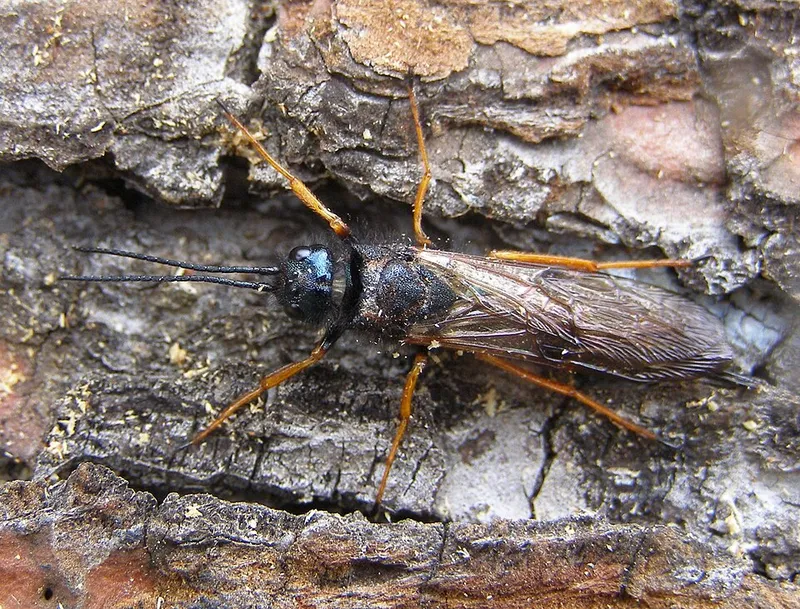
Identification: Sirex noctilio is the primary species of concern. Adults are large, 20-35 mm, with a striking metallic blue-black body and orange-yellow legs. Females have a prominent, stout ovipositor, giving them a wasp-like silhouette. Males have an orange-banded abdomen. Adults are strong fliers; round, smooth exit holes (6-10 mm diameter) in pine bark are the primary field evidence. Unlike bark beetles, the woodwasp bores into the sapwood, and larvae develop deep in the wood rather than in the cambium layer.
Life cycle: One generation per year or one per two years depending on tree condition. Females oviposit in living pine bark, injecting eggs along with a mucus and a symbiotic wood-rot fungus (Amylostereum areolatum). The mucus is phytotoxic, killing cambium and creating dead wood in which the fungus establishes a food source for larvae. Larvae bore into sapwood and heartwood, taking 1-2 years to complete development before pupating near the surface. Primarily a threat to stressed or recently dead pines.
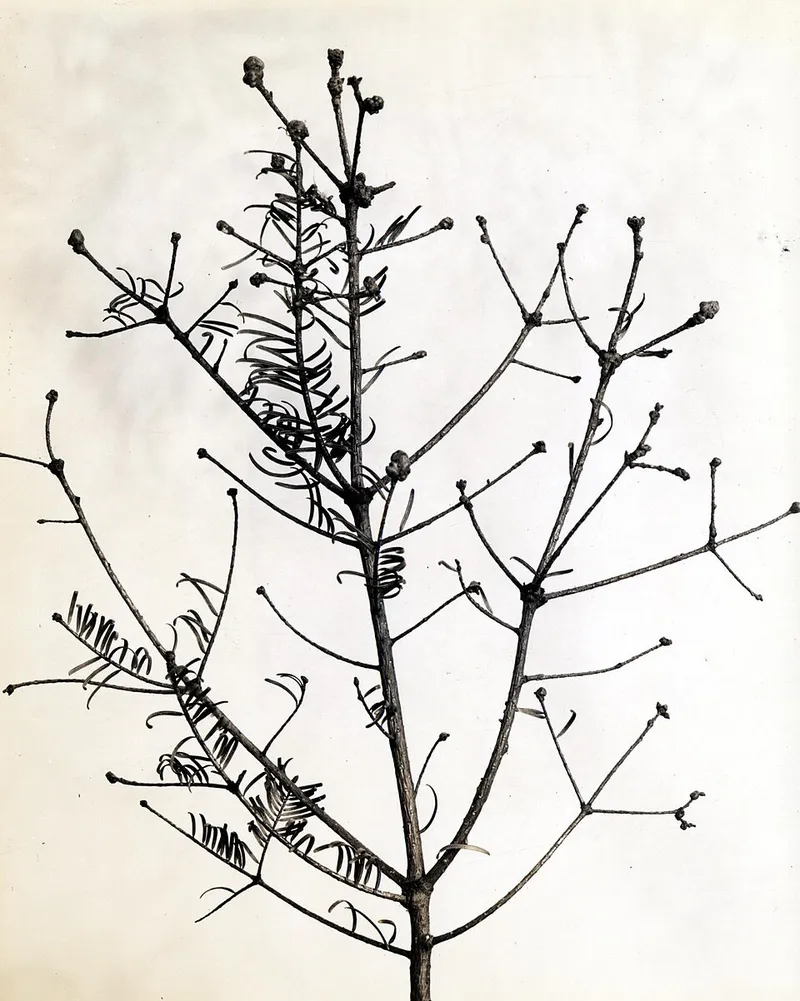
Damage signs: Round smooth exit holes in pine bark, typically 6-10 mm diameter, distinguishable from bark beetle holes by their size and smooth edges. Resin flow at oviposition sites in newly attacked trees. Blue staining of sapwood from the associated fungus. Wilting foliage with retained dead needles. Sirex is a quarantine-listed invasive in the eastern US, established in New York and spreading southward; Tennessee is in the zone of risk for establishment.
Treatment window: No effective chemical control for active infestations. A biological control program using the parasitoid nematode Deladenus siricidicola and parasitic wasps is active in some states.
UT-recommended approach: Avoid creating or leaving pine slash from logging or storm events, which is the primary breeding reservoir. Monitor specimen pines in Middle Tennessee for round exit holes and report suspected sightings to TDA. Do not transport pine firewood from areas with confirmed Sirex populations.
Quick Facts
- Common Name
- Sirex Woodwasp
- Scientific Name
- N/A
- Category
- Landscape Pest
- Region
- Middle Tennessee