About Maple Bladdergall Mite
Maple Bladdergall Mite
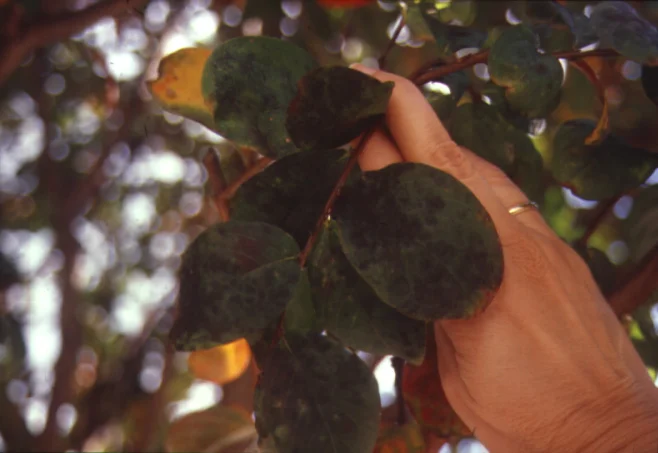
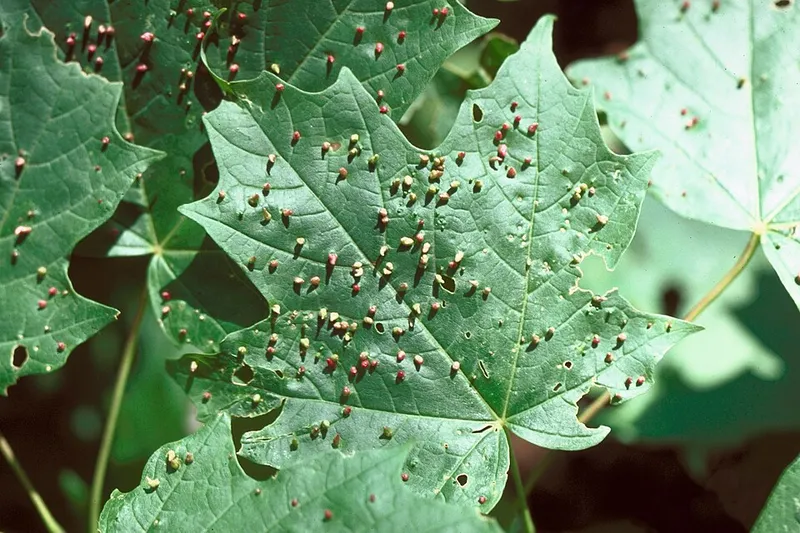
Identification: Vasates quadripedes, the maple bladdergall mite, is an eriophyid mite, microscopic (0.1-0.2 mm), worm-shaped, and invisible to the naked eye. Identification is entirely by symptom: distinctive blister-like galls (bladder galls) on the upper surface of silver maple (Acer saccharinum) and occasionally red maple (A. rubrum) leaves. Galls are 2-5 mm, initially pale green, turning bright red, then black as the season progresses. Dense infestations cover the upper leaf surface with hundreds of individual galls and produce a dramatically warty appearance that alarms homeowners despite minimal tree impact.
Life cycle: Overwinters as adult mites under bark scales. Emerge in early spring as buds break, migrating to newly unfolding leaves where females induce gall formation. The tree tissue forms a blister around each mite, providing shelter and food while the mite feeds and reproduces. Galls are fully formed by late May; mites migrate back to bark for summer aestivation and overwintering as temperatures rise. One generation per year associated with the gall-forming phase; the overwintering adult population determines next year's gall density.
Damage signs: Dense, warty red-to-black bladder galls covering the upper leaf surface of silver maple, appearing mid-April through June in Middle Tennessee. Leaves may cup or distort with very heavy infestations. Despite the alarming appearance, maple bladdergall mites cause cosmetic damage only, no long-term impact on tree health, growth, or vigor has been documented even with repeated heavy infestations.
Treatment window: At bud break in early April, before galls form. Once galls are visible, treatment cannot reverse existing damage, galls persist until leaf drop.
UT-recommended approach: Treatment is rarely warranted, the cosmetic nature of the damage does not justify insecticide use on a mature tree. When control is desired on high-visibility specimens, dormant oil applied at tight bud swell in early March reduces overwintering mite populations. Lime sulfur at bud break is an additional option. Educate clients that red warty galls on silver maple leaves are diagnostic for this mite and require no emergency intervention.
Quick Facts
- Common Name
- Maple Bladdergall Mite
- Scientific Name
- N/A
- Category
- Landscape Pest
- Region
- Middle Tennessee