About Hemlock Woolly Adelgid
Hemlock Woolly Adelgid
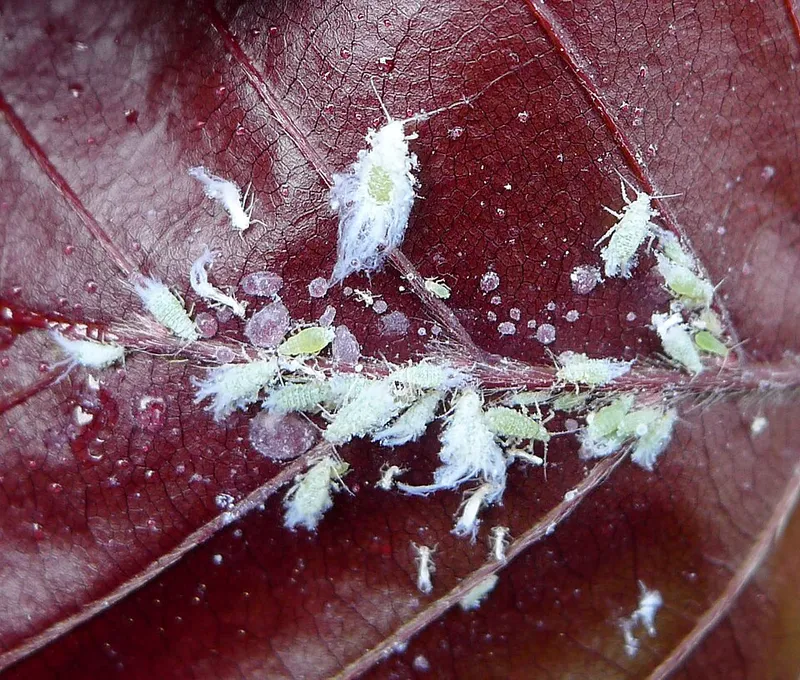
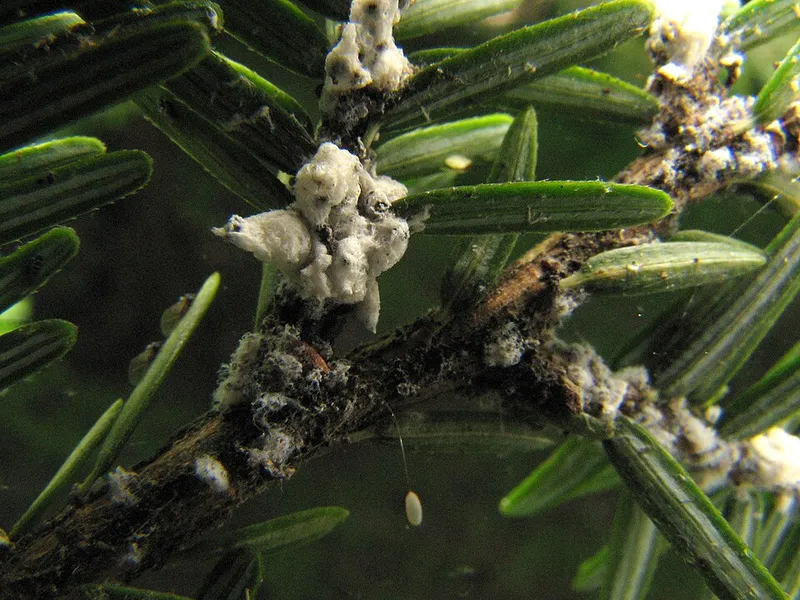
Identification: Adelges tsugae · tiny (0.8 mm) black insects permanently concealed under distinctive white woolly egg sacs attached at the base of hemlock needles on the undersides of branches. The white wool masses, 1-2 mm diameter, are the most visible diagnostic sign and persist on branches year-round. Eastern hemlock (Tsuga canadensis) is the primary host; Carolina hemlock (T. caroliniana) is also susceptible.
Life cycle: Two generations per year with an unusual biology, the sistens generation overwinters as adults and deposits eggs in white wool sacs in October-November, hatching in March-April. The progrediens generation develops in spring and disperses as winged adults in June-July. Feeding occurs year-round but peaks in fall through spring when temperatures are cool.
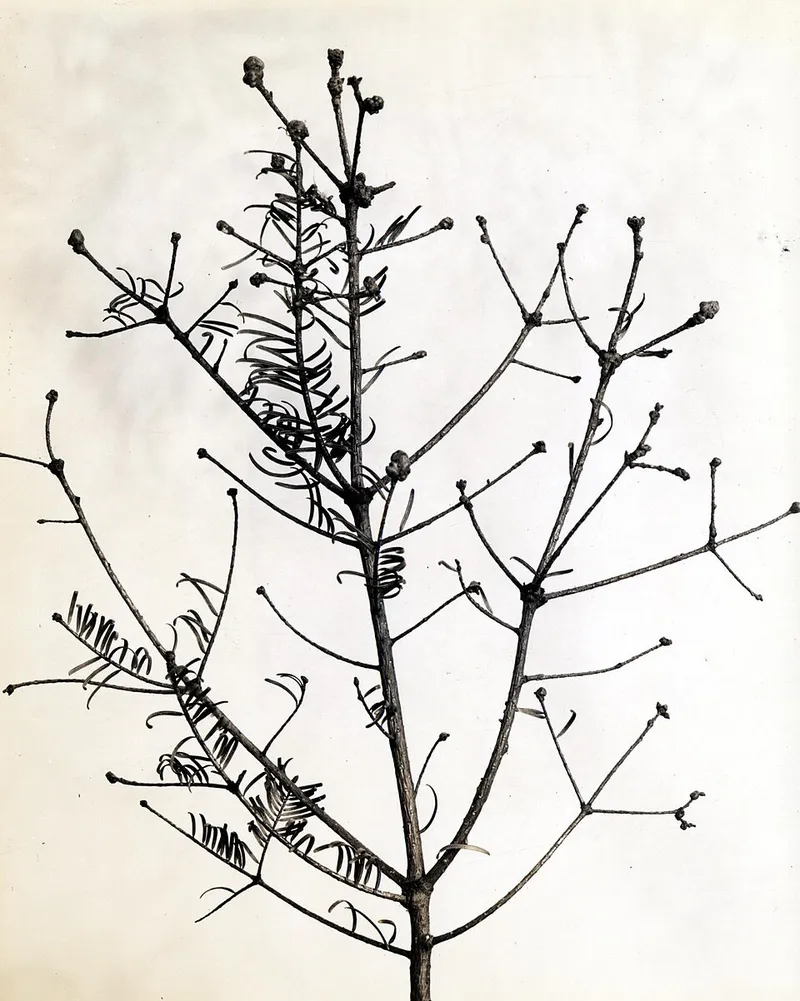
Damage signs: Feeding at needle bases halts the flow of nutrients into needles, causing them to gray and drop prematurely. Infested branches lose needles within 1-2 seasons; untreated trees typically die within 4-10 years. Hemlock woolly adelgid is the primary cause of hemlock decline throughout the Appalachian region including East and Middle Tennessee. Trees stressed by drought are most vulnerable.
Treatment window: October-November (targeting sistens adults before egg deposition) or March-April (targeting progrediens crawlers). Fall treatment is generally preferred as cooler temperatures extend insecticide residual.
UT-recommended approach: Imidacloprid basal bark spray or soil injection is the most effective long-term control, systemic uptake provides 4-7 years of protection per treatment on large trees. Dinotefuran (soil drench or basal bark spray) provides faster uptake for severely stressed trees. Insecticidal soap and horticultural oil control exposed nymphs but require complete spray coverage on large trees. Early detection and treatment are critical, hemlock recovery after severe infestation is poor.
Quick Facts
- Common Name
- Hemlock Woolly Adelgid
- Scientific Name
- N/A
- Category
- Landscape Pest
- Region
- Middle Tennessee