About Euonymus Leafminer Sawfly
Euonymus Leafminer Sawfly (Profenusa canadensis)
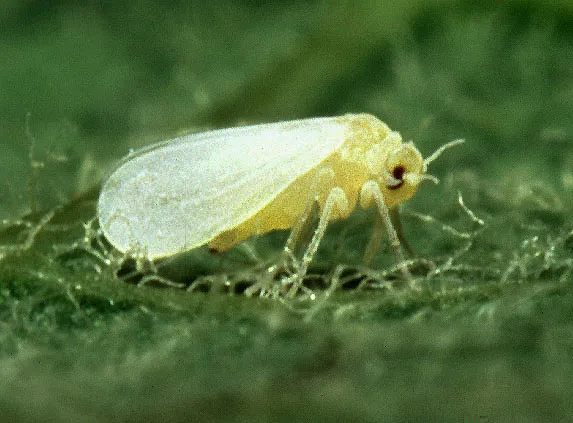
Identification: A small leafmining sawfly in the subfamily Fenusinae. Adults are 4-5 mm, black with pale leg segments, and wasp-like. Larvae are pale white to cream, legless, flattened, mining within the leaf tissue of euonymus (Euonymus spp.), the flat, legless larval form adapted for leaf mining distinguishes fenusine sawfly larvae from free-feeding sawfly larvae. Mines appear as irregular, blotch-type discolorations on the upper leaf surface, brownish to tan, distinct from the serpentine mines of agromyzid fly leafminers. Host-specific to Euonymus; the most commonly affected plants in Middle Tennessee are winged euonymus (E. alatus) and Japanese euonymus (E. japonicus).
Life cycle: One generation per year in Tennessee. Overwinters as a prepupa in the soil beneath host plants. Adults emerge in late spring (May-June) and females oviposit into euonymus leaf tissue. Larvae mine within the leaf through June and July, creating blotch mines that enlarge as larvae grow. Mature larvae exit the mine and drop to the soil to complete pupation. Single-generation biology means the damage window is concentrated in June-July; there is no second-generation pressure after midsummer.
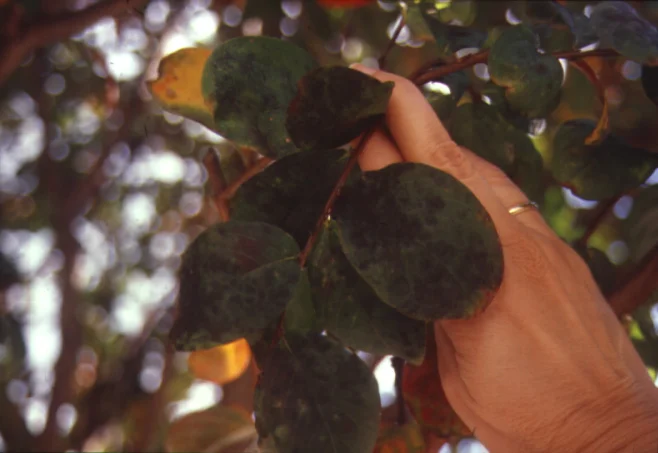
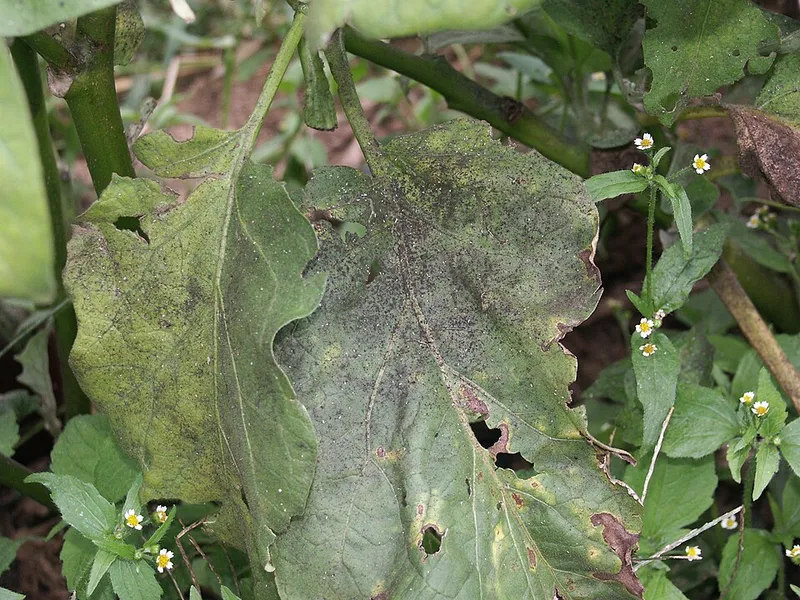
Damage signs: Tan to brown blotch mines on upper euonymus leaf surfaces in June and July. Heavily mined plants have a scorched or blighted appearance by midsummer. Mines do not follow a serpentine path, they expand as irregular patches centered on the feeding area, distinguishing them from agromyzid leafminer damage. Winged euonymus in Middle Tennessee foundation plantings is consistently affected; Japanese euonymus used as evergreen hedges is also vulnerable. Repeated infestations over several years weaken plants and increase susceptibility to euonymus scale (Unaspis euonymi), a separate and often co-occurring pest.
Treatment window: At adult emergence in May, before eggs are laid, or immediately at mine first appearance. Once larvae are inside the leaf, contact insecticides cannot reach them, systemic treatments or preventive timing are required.
UT-recommended approach: Systemic imidacloprid soil drench in early May provides residual protection against the ovipositing adults and newly hatched larvae before they establish protected mines. Foliar contact insecticides are ineffective against mining larvae; treat only at adult emergence or use systemic chemistry. Remove and dispose of heavily mined leaf litter at season's end to reduce soil pupal populations for the following year.
Quick Facts
- Common Name
- Euonymus Leafminer Sawfly
- Scientific Name
- Profenusa canadensis
- Category
- Landscape Pest
- Region
- Middle Tennessee