About Box Tree Moth
Box Tree Moth (Cydalima perspectalis)
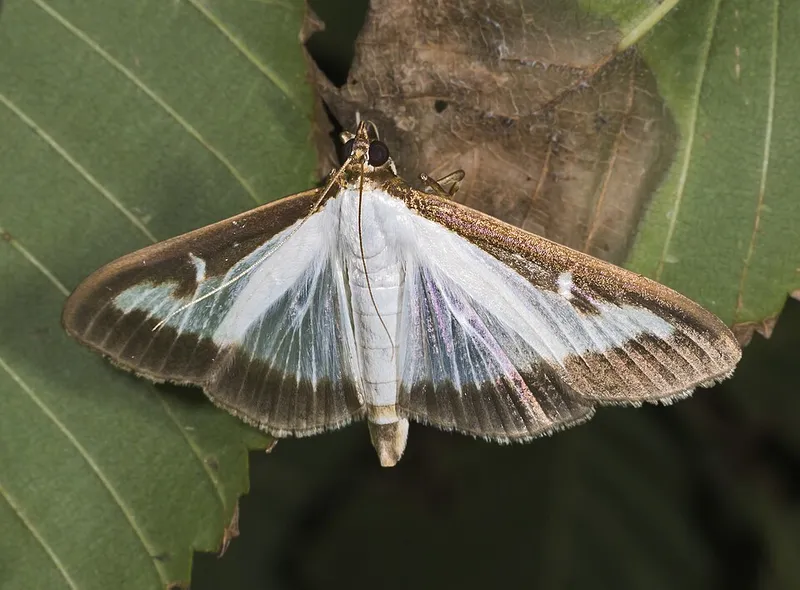
Identification: Adults are white with a broad brown border on the forewings, 40-45 mm wingspan. Larvae are the damaging stage: up to 40 mm, pale green with black head and longitudinal black and white stripes, feeding inside boxwood (Buxus spp.) webbing. An invasive species from Asia, established in Europe and now confirmed in parts of the northeastern US and Canada; as of 2026, not established in Tennessee but of active quarantine concern.
Life cycle: Two to three generations per year in European climates with mild winters. Overwinters as larvae in webbing among boxwood stems. Larvae resume feeding in early spring; pupation occurs in spring and summer. Adults are nocturnal and attracted to light traps. The potential for establishment in Middle Tennessee's Zone 6b/7a climate is considered high if the pest arrives.
Damage signs: Larvae web together and skeletonize boxwood foliage, then consume entire leaves and bark from younger stems. Severe infestations kill entire boxwood plants within one season. In European landscapes where the pest is established, complete loss of mature boxwood hedges has occurred within 2-3 years of first infestation. This distinguishes box tree moth from other boxwood pests (boxwood leafminer, boxwood psyllid) in severity.
Treatment window: In areas where the pest is established: early spring targeting first-instar larvae before webbing thickens. Pheromone traps used for early detection monitoring.
UT-recommended approach: Monitor boxwood plantings with pheromone traps during moth flight periods (typically May-September). Report any suspected box tree moth larvae or adults with webbed boxwood damage to the Tennessee Department of Agriculture immediately. Bacillus thuringiensis var. kurstaki (Btk) and spinosad are effective against early-instar larvae. Do not move boxwood cuttings or transplants from known infested areas.
Quick Facts
- Common Name
- Box Tree Moth
- Scientific Name
- Cydalima perspectalis
- Category
- Landscape Pest
- Region
- Middle Tennessee