About Goldfinches
Goldfinches (Spinus tristis)
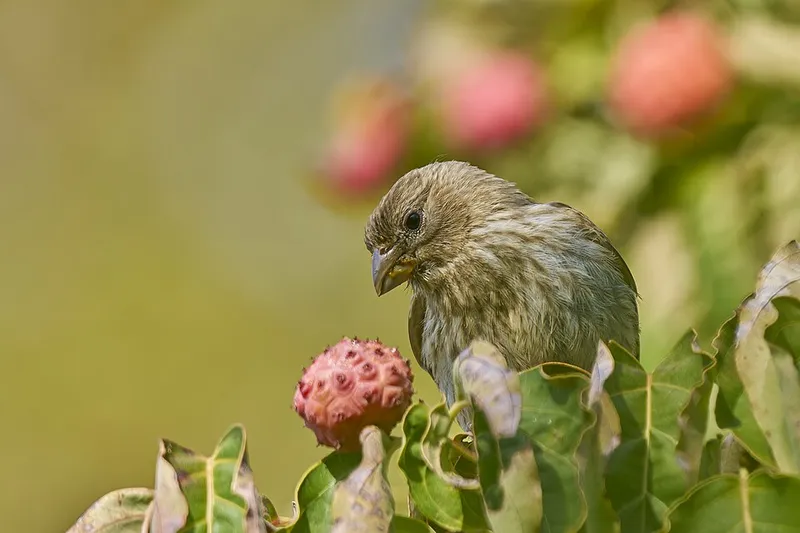
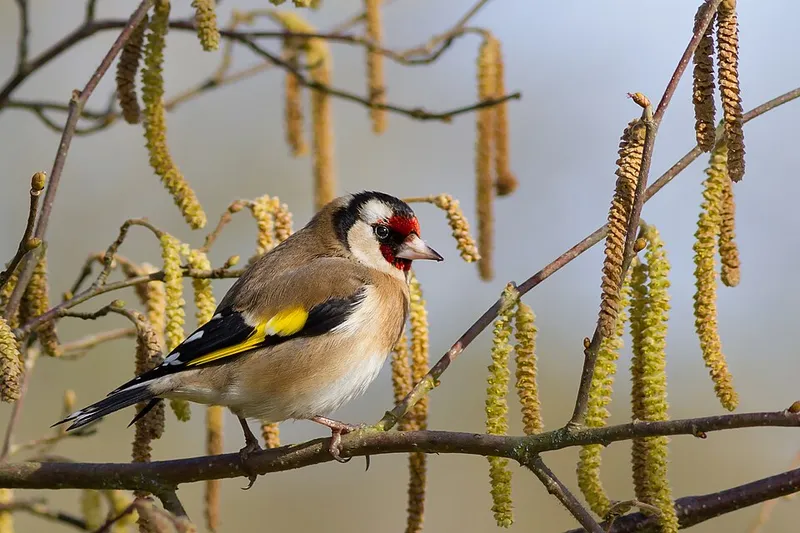
Identification: American goldfinch, small finch, 4.5-5 inches. Breeding male is brilliant lemon-yellow with a black forehead cap, black wings with two white wing bars, and a black tail with white patches. Female and non-breeding male are dull olive-yellow with the same black-and-white wing pattern. Winter plumage in both sexes is significantly duller, a buffy-gray wash replaces the yellow, which leads to frequent misidentification. The small, conical, pale orange bill and undulating flight pattern aid year-round identification. Year-round resident in Middle Tennessee with local movements supplemented by northern birds in winter.
Life cycle: Breeds late, July through August, later than most North American passerines, timed to coincide with thistle and sunflower seed availability. Single brood of 4-6 eggs per season. Highly gregarious; forms flocks of dozens to hundreds outside the breeding season.
Damage signs: Heavy seed consumption at nyjer (thistle) and sunflower feeders, producing significant seed waste and hull accumulations beneath feeders that can smother turf and create fungal mats. Goldfinches also feed directly on seed heads of ornamental coneflowers (Echinacea), black-eyed Susans, and cosmos, stripping seed heads before they can self-seed or be collected. Unlike sparrows, goldfinches cause no structural damage.
Treatment window: Feeder consumption is highest October through April when natural seed sources are depleted. Ornamental seed-head feeding peaks in August through October.
UT-recommended approach: Tube feeders with nyjer seed and small ports limit spillage and reduce hull accumulation compared to platform feeders. Positioning feeders over mulch or gravel rather than turf prevents hull mat formation. Allowing ornamental seed heads to stand through fall provides a preferred natural food source that draws foraging away from structures.
Quick Facts
- Common Name
- Goldfinches
- Scientific Name
- N/A
- Category
- Household Pest
- Region
- Middle Tennessee