About Eastern Gray Squirrel
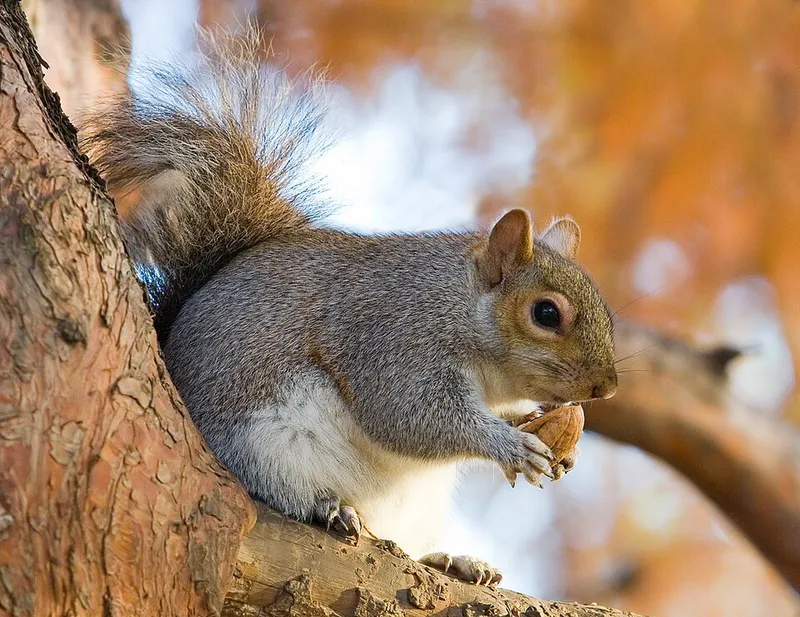
Eastern Gray Squirrel (Sciurus carolinensis)
Identification: Medium-sized tree squirrel, 16-20 inches total length including the bushy tail. Upper body is grizzled gray; underside is white to cream. A melanistic (all-black) form occurs rarely. Distinguished from fox squirrel by smaller size and pure gray coloration lacking the fox squirrel's rusty-orange underside. Ear tufts absent. Common in hardwood-dense neighborhoods across the I-65 corridor.
Life cycle: Two breeding seasons per year, January through February and June through July. Litter size is 2-4. Young are weaned at 10-12 weeks. Home range is typically 1-5 acres; urban populations maintain smaller ranges with higher densities. No hibernation; caching behavior intensifies in fall.
Damage signs: Excavated bulb caches in turf and planting beds, shallow, conical holes 1-2 inches deep scattered across the lawn, especially in fall. Gnawed bark at branch crotches and on young tree trunks, particularly in late winter when natural food is scarce. Nest material debris under eaves or in gutters. Chewed entry points at soffits and attic vents when denning in structures.
Treatment window: Fall bulb-caching damage peaks September through November. Bark stripping occurs most commonly January through March. Attic intrusion attempts concentrate in late winter when females seek denning sites for spring litters.
UT-recommended approach: Exclusion is the permanent solution for structural intrusion, cap entry points with 16-gauge hardware cloth after confirming all animals have exited. Bulb cages or planting bulbs at depth beneath wire mesh deters digging. Tree baffles on trunks and isolated feeders with squirrel guards reduce landscaping pressure. Live trapping with cage traps baited with peanuts or corn relocates nuisance individuals.
Quick Facts
- Common Name
- Eastern Gray Squirrel
- Scientific Name
- N/A
- Category
- Household Pest
- Region
- Middle Tennessee