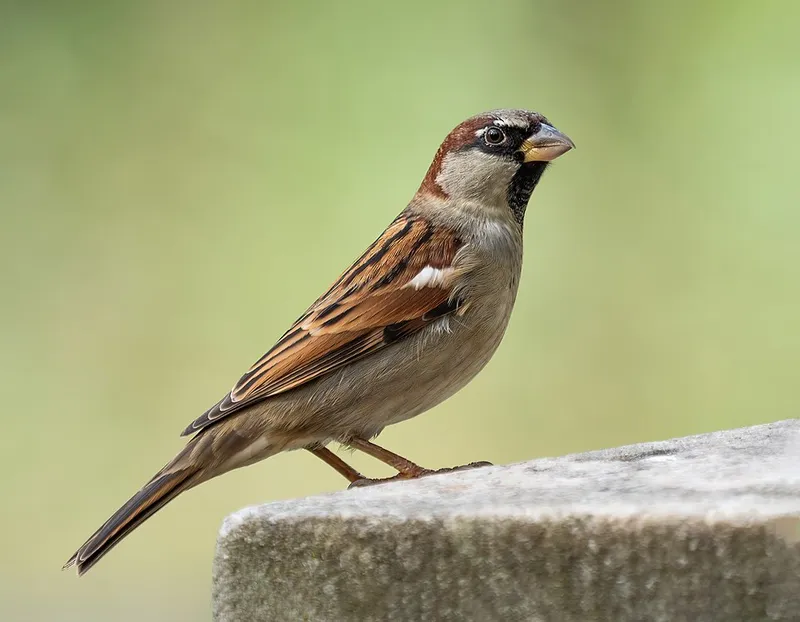
About Sparrows
Sparrows (Passer domesticus)
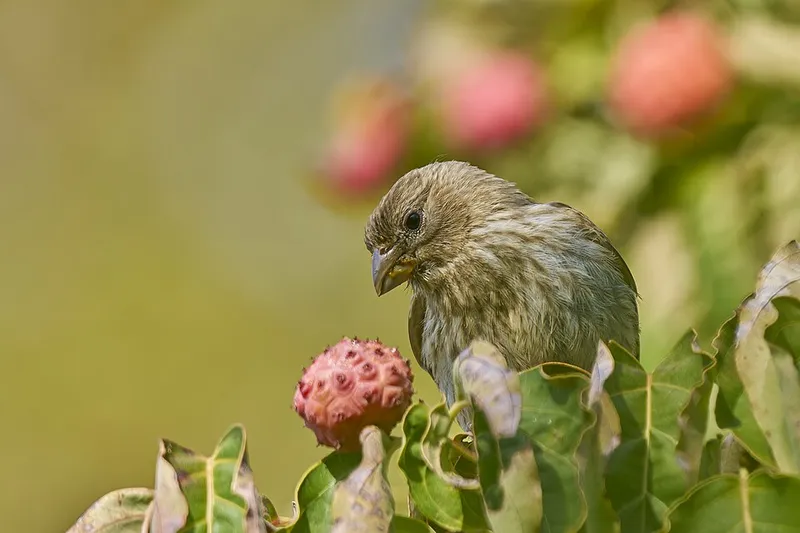
Identification: House sparrow, the primary pest sparrow species in Middle Tennessee. Stocky, 5-6 inches, with a heavy seed-cracking bill. Male has a gray crown, chestnut nape, black bib, and white cheek. Female is plain buffy-brown with a broad creamy supercilium (eyebrow stripe) and streaked back, the pale eyebrow on an otherwise unmarked tan face distinguishes her from native sparrow species that show more contrast. Introduced from Europe in the 1850s; now one of the most abundant birds in North America.
Life cycle: Breeds year-round in Middle Tennessee when temperatures permit, with peak activity March through August. Clutches of 3-6 eggs, 3-4 broods per year. Aggressively defends nest cavities and displaces native cavity-nesting birds (bluebirds, swallows, chickadees). Nests in any available cavity including building eaves, dryer vents, gutters, and nest boxes.
Damage signs: Dense nesting material (grass, feathers, paper) packed into structural voids and drainage channels causes blocked gutters, dryer fire hazards, and HVAC contamination. Droppings accumulate on windowsills, signage, and vehicles. Grain and seed depredation at feeders. Soil scratching and dust-bathing creates bare patches in fine-textured seedbeds. Native cavity-nester displacement has conservation implications beyond property damage.
Treatment window: Block entry points before February when pairs begin scouting nest sites. Active nests cannot be legally removed once eggs are present under the Migratory Bird Treaty Act, though house sparrows are exempt from MBTA protection as an introduced non-native species.
UT-recommended approach: Hardware cloth (1/2-inch mesh) over eave gaps, vents, and utility penetrations is the most durable exclusion. Trap-and-remove programs using repeating traps are legally permissible for house sparrows without a permit. Removal of loose nest material before eggs are laid resets the cycle without legal complication.
Quick Facts
- Common Name
- Sparrows
- Scientific Name
- N/A
- Category
- Household Pest
- Region
- Middle Tennessee