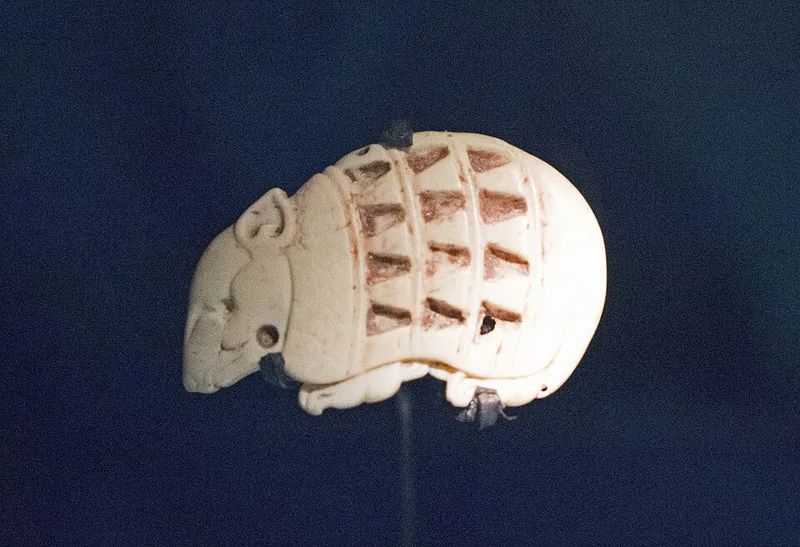
About Armadillos
Armadillos (Dasypus novemcinctus)
Identification: Nine-banded armadillo, the only armadillo species in the United States. Adults are 15-17 inches long plus a 14-inch tail, weighing 8-17 pounds. Covered in bony, jointed armor plates with a distinctive pattern of nine flexible bands across the midsection. Low-slung gait, prominent pointed snout, and large upright ears. Coloration is grayish-brown. Tracks show five claw marks on the front feet and four on the rear.
Life cycle: Armadillos give birth to four identical offspring (always same-sex quadruplets from a single fertilized egg) in March-April after a 4-month gestation. Young reach adult size by fall. Nocturnal and crepuscular; den in burrows they excavate beneath tree roots, brush piles, and building foundations. Range has expanded steadily northward into Middle Tennessee over the past two decades.
Damage signs: Conical, 3-5 inch deep rooting holes scattered throughout turf and planting beds, the most diagnostic sign. Unlike skunk damage (shallow scratches), armadillo digging is concentrated and deep, targeting grubs and earthworms by scent. Newly seeded lawns and freshly mulched beds are particularly vulnerable. Burrows near foundations pose structural risks over time.
Treatment window: Spring through fall when soil moisture keeps invertebrate prey near the surface. Activity drops in cold snaps but armadillos do not hibernate, damage can occur in any mild winter period.
UT-recommended approach: Exclusion with hardware cloth buried at least 12 inches and angled outward at 90 degrees prevents burrowing under structures. Cage trapping (12×10×32 inch raccoon-size traps) with earthworms or overripe fruit placed along established travel paths is effective. Repellents have inconsistent field results. Eliminating grub populations reduces food availability but does not eliminate armadillo pressure entirely.
Quick Facts
- Common Name
- Armadillos
- Scientific Name
- N/A
- Category
- Household Pest
- Region
- Middle Tennessee