About Calico Scale
Calico Scale
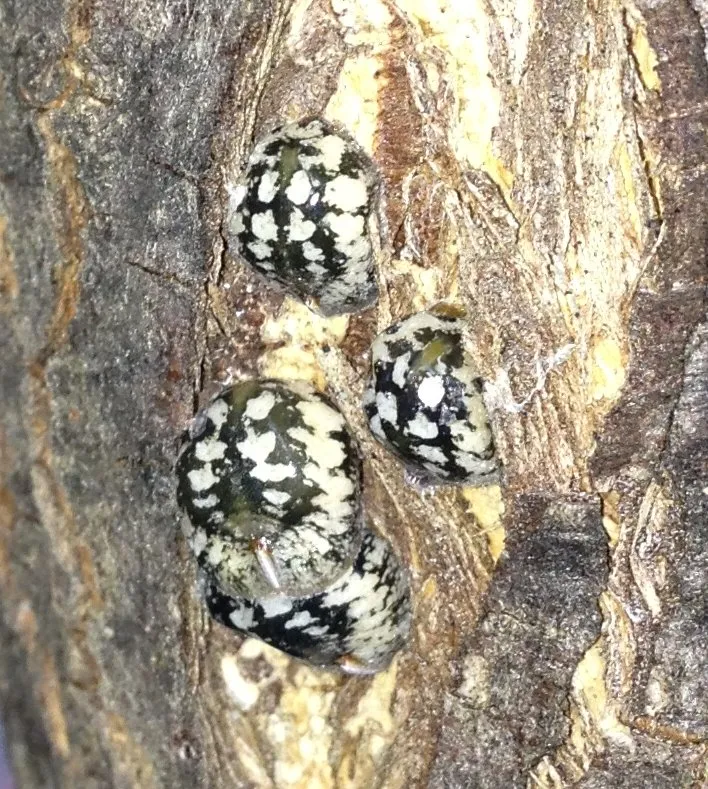
Identification: Eulecanium cerasorum · a soft scale (family Coccidae), 4-6 mm, with a hard, glossy brown cover marked by a white and black blotchy pattern that gives it the "calico" name. The distinctive patterned surface makes it one of the more identifiable soft scales in Middle Tennessee. Infests a broad range of shade trees and ornamentals including honey locust (Gleditsia triacanthos), euonymus, hackberry, dogwood, and various maples.
Life cycle: One generation per year. Overwinters as second-instar nymphs on bark of twigs and small branches. Nymphs resume feeding in early spring; females mature, swell noticeably, and produce crawlers from May through June. Crawlers settle on leaves through summer and return to bark in late summer. Mature calico-patterned females in May just before egg laying are the most noticeable life stage.
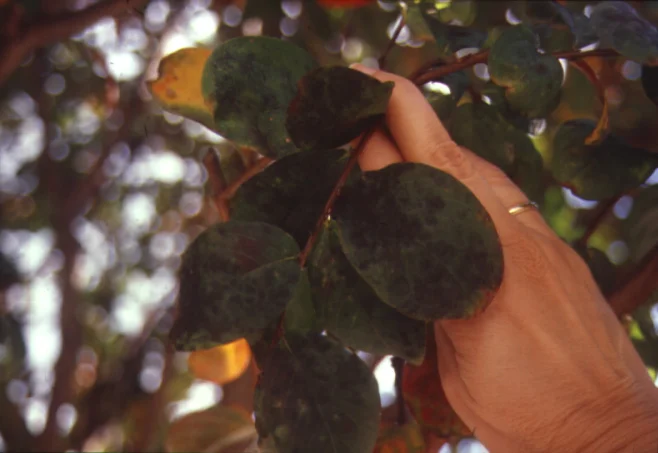
Damage signs: Heavy honeydew production on host trees, sooty mold on foliage and surfaces beneath infested trees, and branch dieback on small-diameter limbs. Honey locust in urban landscapes in Middle Tennessee, a commonly planted street and parking-lot tree, can sustain repeated infestations that progressively thin the canopy. Nymph feeding in spring causes chlorosis and reduces shoot elongation.
Treatment window: At crawler emergence in May-June for contact treatments. Dormant oil in late February-March reduces the overwintering nymph population. Systemic applications are most effective when applied in early spring before adult females mature.
UT-recommended approach: Dormant horticultural oil as the primary intervention on manageable-sized trees. Systemic imidacloprid soil drench in early spring for recurring infestations on large trees. Crawler-stage insecticidal soap in May-June addresses the remaining population. Monitor honey locust along driveways and parking areas in the Columbia, TN area annually, populations on heat-stressed urban trees tend to be most severe.
Quick Facts
- Common Name
- Calico Scale
- Scientific Name
- N/A
- Category
- Landscape Pest
- Region
- Middle Tennessee