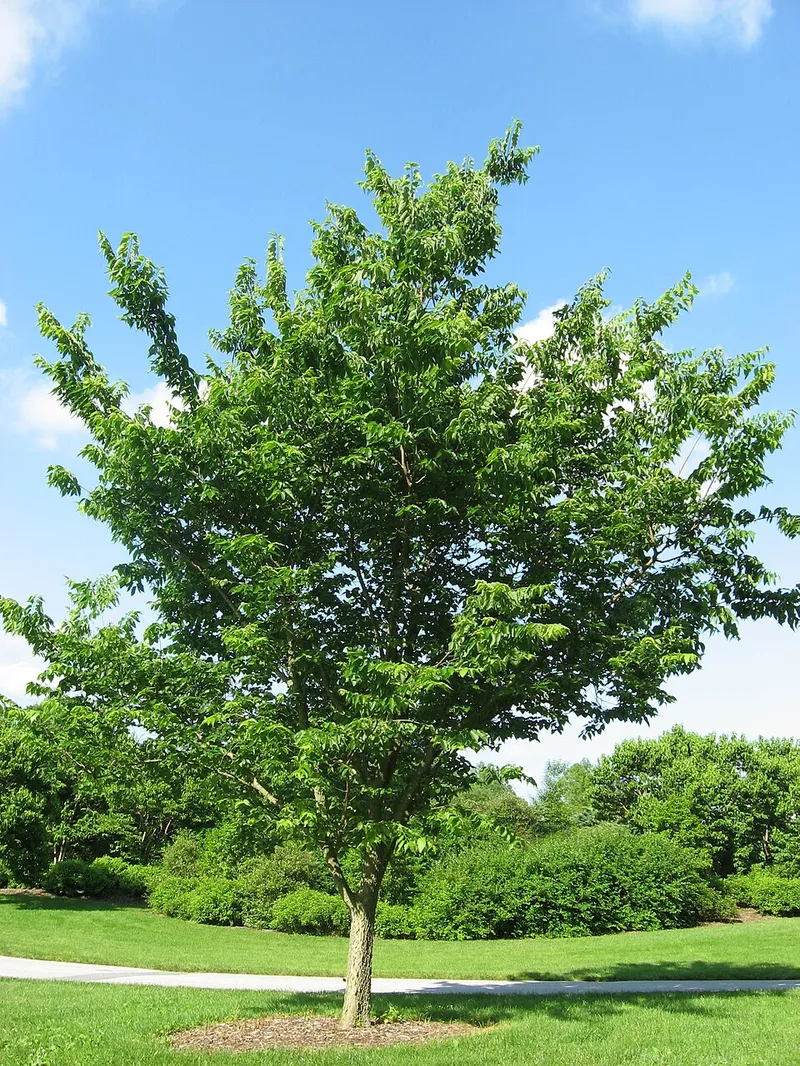
About Hackberry
Hackberry (Celtis occidentalis)
Common Hackberry
Full to part sun, medium to dry moisture, tolerates clay, sandy loam, rocky, and compacted soils, pH 5.5-8.0.
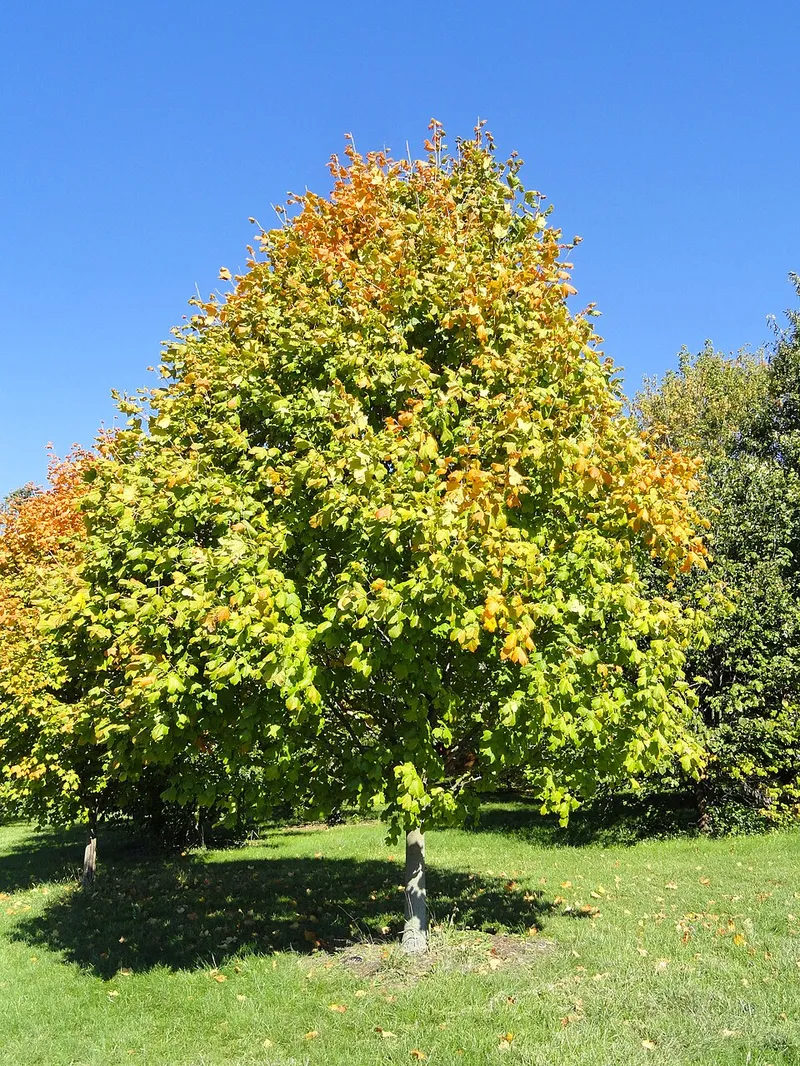
40-60 feet tall by 40-60 feet wide; blooms in early spring with inconspicuous greenish flowers as leaves emerge; fruit is a small round drupe 0.6-1 cm, ripening dark purple in October and persisting through winter. Growth rate medium to fast.
Native region: Statewide, common on upland slopes, rocky ridges, and disturbed sites throughout Middle Tennessee; frequently colonizes fence rows and limestone outcrops across the I-65 corridor.
Corky, irregular warts and ridges on the gray bark are the most reliable identification feature for Celtis occidentalis · more pronounced warting than Sugarberry's smoother trunk. Like its close relative, it develops witches'-broom twig clusters caused by a complex of powdery mildew and eriophyid mites, documented in UT Extension disease surveys as cosmetic rather than threatening to tree health. Hackberry is a keystone species for lepidopteran larvae: hackberry emperor (Asterocampa celtis), tawny emperor (A. clyton), and question mark (Polygonia interrogationis) butterflies all use Celtis as their exclusive or primary larval host. The persistent fruit sustains wintering birds through February in Middle Tennessee. Extreme pH flexibility makes it one of the few large shade trees that performs reliably on the shallow, high-pH soils over Lebanon limestone common in Columbia and surrounding Maury County.
Quick Facts
- Common Name
- Hackberry
- Scientific Name
- Celtis occidentalis
- Plant Type
- Tree
- Region
- Middle Tennessee