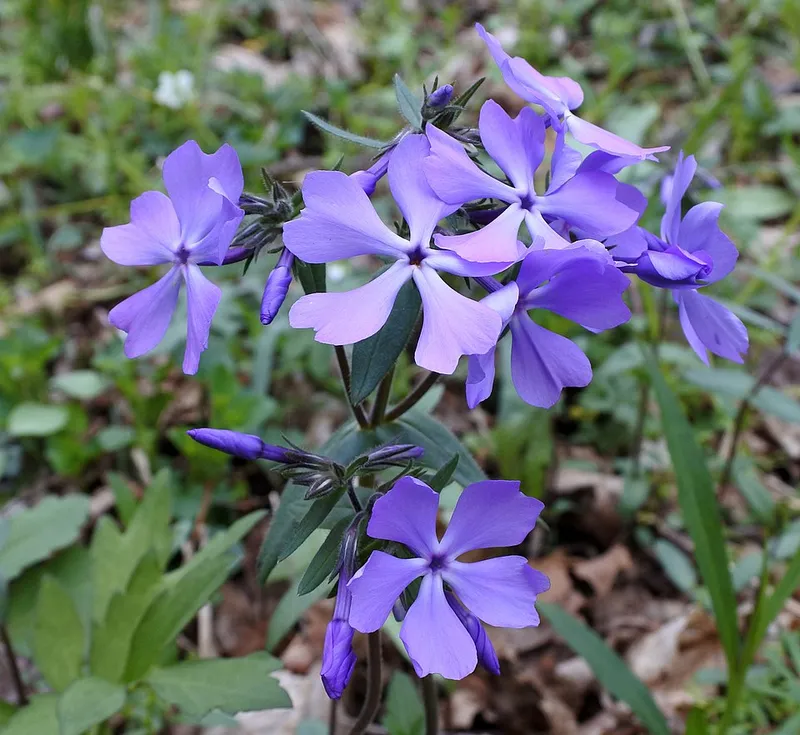
About Woodland Phlox
Woodland Phlox (Phlox divaricata)
Wild Blue Phlox, Louisiana Phlox
Part to full shade, medium moisture, prefers rich humusy loam but tolerates clay with organic amendment, pH 5.5-7.0.
20-30 cm tall by 30-60 cm wide; blooms April-May with loose clusters of pale blue to lavender flowers 2-2.5 cm across, lightly fragrant; spreads by stolons to form loose colonies. Semi-evergreen basal rosettes persist through winter.
Germination Code C (cold stratification, 60 days); division in early spring or fall is the preferred propagation method.
Native region: Statewide in Tennessee in moist woodland edges, floodplain forests, and shaded slopes; particularly common in Middle Tennessee's rich cedar-glade margins and stream corridors.
P. divaricata is a reliable spring perennial for shaded sites in Maury County lawns and woodland gardens, filling the gap between late-winter bulbs and summer perennials. In Middle Tennessee's humid springs, powdery mildew (Erysiphe spp.) develops on foliage after bloom, shearing plants back by half immediately after flowering improves air circulation and stimulates fresh basal growth. Distinct from garden phlox (P. paniculata) by its smaller stature, shade preference, and spring bloom period. Attracts swallowtail butterflies and hummingbirds; tubular flowers with a narrow throat are particularly suited to long-tongued pollinators including sphinx moths that visit at dusk.
Quick Facts
- Common Name
- Woodland Phlox
- Scientific Name
- Phlox divaricata
- Plant Type
- Tree
- Region
- Middle Tennessee