About White Fringetree
White Fringetree (Chionanthus virginicus)
Grancy Gray Beard, Old-man's-beard, Fringe Tree
Full sun to open shade, medium to moderately dry moisture, drought-tolerant once established, tolerates clay and loam, pH 4.5-7.0.
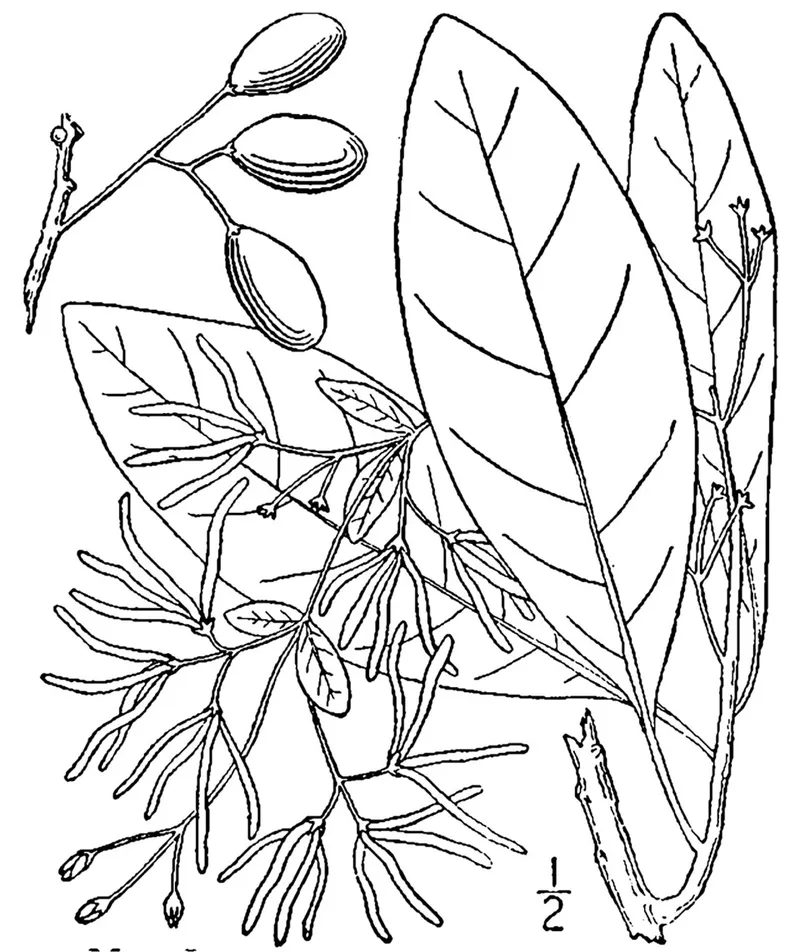
12-20 feet tall by 12-20 feet wide; fragrant white flowers with very narrow, strap-like petals in drooping panicles in April-May; fruit is an olive-like dark blue drupe 10-15 mm, ripening August-September. Growth rate slow.
Native region: Statewide in Tennessee, most frequent on moist woodland edges, stream banks, and rocky slopes; particularly well represented in Middle and East Tennessee.
Chionanthus virginicus is a native Tennessee small tree or large multi-stemmed shrub that puts on one of the most distinctive spring flower displays of any woody plant in the region, the drooping, fringe-like white panicles are unmistakable in April along woodland margins. It is dioecious; male plants produce showier flower clusters, while female plants produce the fruit consumed by wood thrushes and other migratory birds in late summer. White fringetree is substantially more shade- and drought-tolerant than its Chinese relative and native to the region's soils. Ash lilac borer (Podosesia syringae) can attack specimens in the olive family and should be monitored in stressed trees; otherwise, pest and disease pressure is low. Established plants handle Middle Tennessee drought periods without supplemental water after the second year.
Quick Facts
- Common Name
- White Fringetree
- Scientific Name
- Chionanthus virginicus
- Plant Type
- Tree
- Region
- Middle Tennessee