About Tall Stewartia
Tall Stewartia (Stewartia monadelpha)
Part to full sun, moist to well-drained, prefers humus-rich acidic loam, pH 4.5-6.5; intolerant of waterlogged or compacted soils.
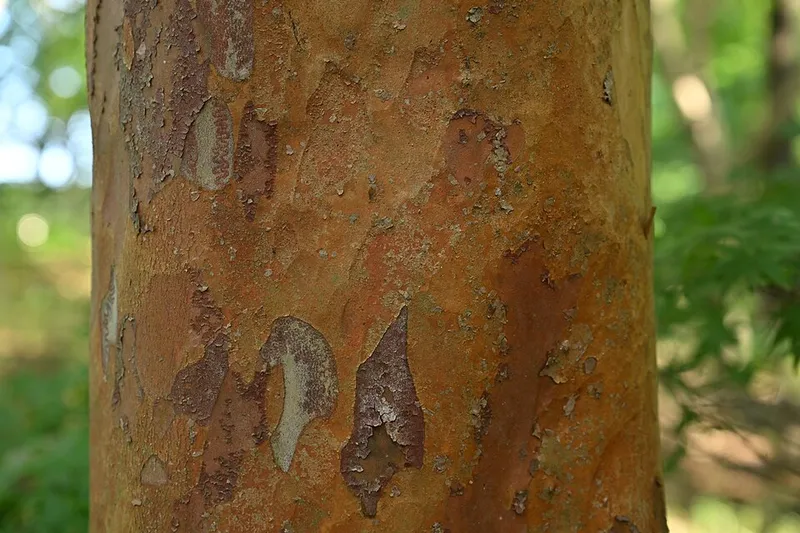
20-25 feet tall by 15-20 feet wide; blooms June-July with white, single, camellia-like flowers 3-4 cm across with orange-red anthers; fruit a woody capsule; bark exfoliates in orange, gray, and cinnamon patches. Growth rate slow to moderate.
Native region: Not native to Tennessee; ornamental introduction from Japan and Korea.
The exfoliating multi-color bark is the primary identification feature and provides year-round ornamental interest, more pronounced on mature stems. S. monadelpha is the most heat-tolerant stewartia, making it the most viable species for Middle Tennessee's Zone 6b/7a summers compared to S. pseudocamellia. Requires consistent moisture during establishment; summer drought on shallow, rocky soils around Columbia will cause leaf scorch and early drop. Site in morning sun with afternoon shade in exposed south-facing locations. Mulch generously to maintain soil moisture and moderate root-zone temperatures. Canker diseases documented on stressed specimens, avoid wounding bark during mowing or edging.
Quick Facts
- Common Name
- Tall Stewartia
- Scientific Name
- Stewartia monadelpha
- Plant Type
- Tree
- Region
- Middle Tennessee