About London Planetree
London Planetree (Platanus x acerifolia)
Full sun, medium to moist, tolerates clay, compacted, and wet soils, pH 5.5-8.0; highly tolerant of urban pollution, heat, and reflected light.
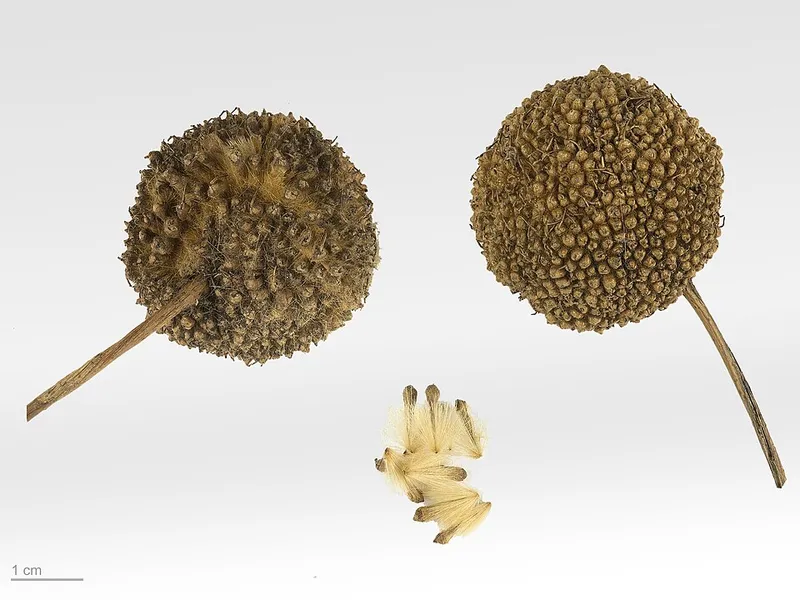
70-100 feet tall by 65-80 feet wide; monoecious; flowers in spherical heads in spring; fruit is a persistent spherical achene ball about 2.5 cm in diameter, usually in pairs on a hanging stalk, persisting through winter. Growth rate fast.
Native region: Not native to Tennessee; hybrid origin (likely Platanus orientalis × Platanus occidentalis), first documented in 17th-century Europe.
London Planetree is the standard large street and park tree in many Tennessee municipalities, Columbia included, because its tolerance of compacted, restricted rooting zones and urban soil chemistry exceeds that of most large canopy trees. The exfoliating bark in tan, gray, and cream creates a camouflage pattern that is a reliable identification feature year-round. Anthracnose (Apiognomonia veneta) is the most significant disease problem: UT Extension shade tree publications document its frequency in Middle Tennessee, where cool, wet spring weather creates ideal infection conditions, causing early shoot dieback and leaf drop that is alarming but rarely fatal to established trees. Resistant cultivars ('Bloodgood', 'Columbia', 'Liberty') substantially reduce anthracnose incidence and are preferred for new installations. Powdery mildew and canker are secondary concerns on stressed specimens. Fruit ball litter and massive leaf drop require management on residential sites.
Quick Facts
- Common Name
- London Planetree
- Scientific Name
- Platanus x acerifolia
- Plant Type
- Tree
- Region
- Middle Tennessee