About Cleyera
Cleyera (Ternstroemia gymnanthera)
Japanese Cleyera, Cleyera japonica
Full sun to full shade, moist to well-drained, tolerates clay with adequate drainage, pH 4.5-6.5; moderate drought tolerance once established.
8-15 feet tall by 5-10 feet wide; inconspicuous creamy white flowers in summer; red to yellow-orange berry-like fruit in fall persisting into winter. Growth rate slow to medium. Broadleaf evergreen.
Native region: Not native to Tennessee; ornamental introduction from Japan and East Asia.
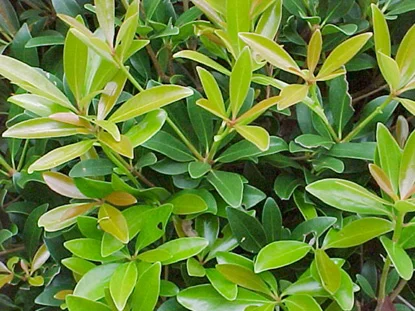
Cleyera is widely used as a foundation and screening shrub in Middle Tennessee, valued for its glossy dark-green foliage with bronze-red new growth, shade tolerance, and low maintenance requirements. It is frequently confused with Camellia sasanqua in nurseries, but cleyera produces smaller, less showy flowers and characteristic reddish petioles. The species handles Middle Tennessee's clay soils and summer humidity well provided drainage is adequate, standing water causes root problems. New growth emerging in spring is susceptible to late frosts in Zone 6b; site in sheltered locations or be prepared for cosmetic dieback on tips. Scale insects are occasional pests on stressed plants; inspect stem junctions in late spring. Minimal pruning needs make it suitable for low-maintenance shrub borders.
Quick Facts
- Common Name
- Cleyera
- Scientific Name
- Ternstroemia gymnanthera
- Plant Type
- Tree
- Region
- Middle Tennessee