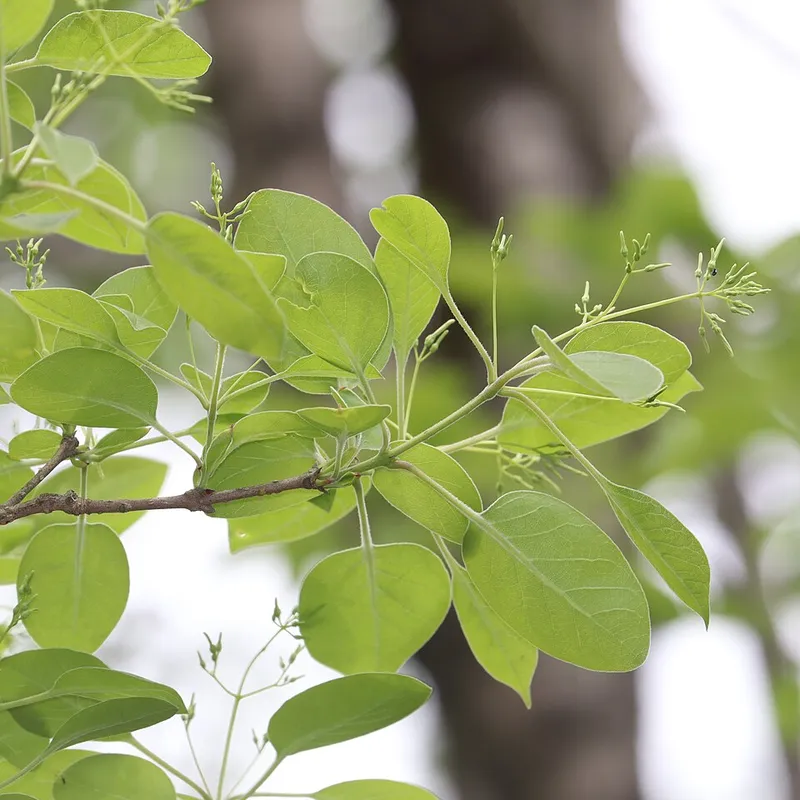
About Chinese Fringetree
Chinese Fringetree (Chionanthus retusus)
Full to part sun, medium moisture, well-drained to moderately drained soils, tolerates clay with good drainage, pH 5.5-7.5.
15-20 feet tall by 15-25 feet wide; profuse white flowers with strap-like petals in upright to spreading panicles in May-June; fruit is a dark blue-black drupe 10-15 mm, ripening in September. Growth rate slow to medium. Bark becomes blocky and furrowed on older specimens.
Native region: Not native to Tennessee; ornamental introduction from China, Korea, and Japan.
Chionanthus retusus blooms about two weeks later than the native white fringetree (C. virginicus) and produces flowers in upright panicles rather than drooping ones, a reliable distinction between the two species. The dark fruit is consumed by birds in fall. In Middle Tennessee, Chinese fringetree is more tolerant of heat and full sun than C. virginicus and performs well in exposed residential and commercial landscapes from Columbia northward along the I-65 corridor. It is dioecious, with male trees producing more abundant flowers; both sexes are needed for fruit. No serious insect or disease pests affect established specimens in Tennessee, though scale and borers occasionally colonize drought-stressed trees. Mulching reduces soil moisture stress and is particularly important during the establishment period in Middle Tennessee's clay-dominant soils.
Quick Facts
- Common Name
- Chinese Fringetree
- Scientific Name
- Chionanthus retusus
- Plant Type
- Tree
- Region
- Middle Tennessee