About Catawba Rhododendron
Catawba Rhododendron (Rhododendron catawbiense)
Catawba Rosebay, Red Laurel, Mountain Rosebay
Light shade to part sun, moist to well-drained, prefers humus-rich, well-aerated acidic soil, pH 4.5-5.5; intolerant of poorly drained clay, alkaline soil, or compaction.
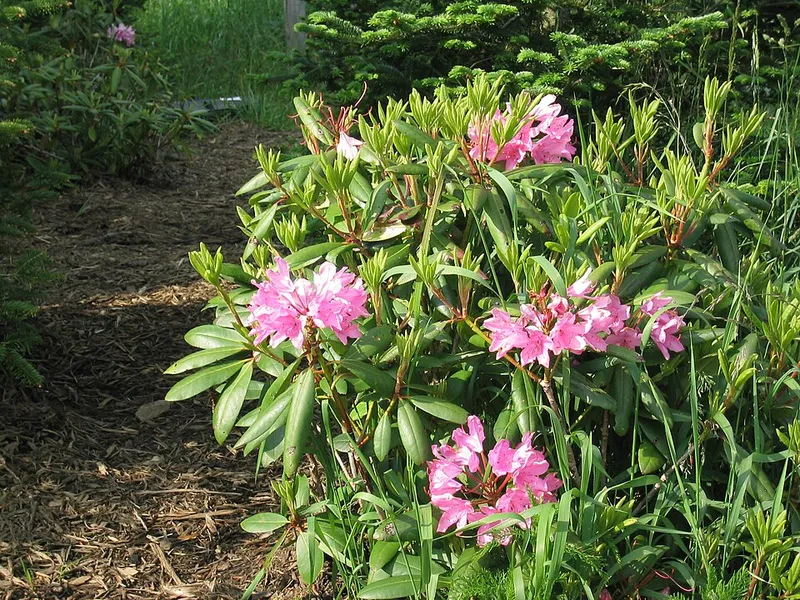
6-10 feet tall and wide; blooms May-June with large rounded trusses of lilac-purple to magenta flowers; fruit a brown capsule. Growth rate slow. Broadleaf evergreen. Spreads slowly by layering.
Propagation by semi-hardwood cuttings in late summer; seeds require light and warm-cold stratification.
Native region: Primarily East Tennessee, Blue Ridge and Ridge and Valley provinces; absent from the Central Basin and most of Middle Tennessee at lower elevations.
R. catawbiense is the parent species of most cold-hardy hybrid rhododendrons used in American horticulture. It is not native to the Columbia area but is planted across Middle Tennessee in shaded, acidic beds. The primary failure mode in this region is alkaline or poorly drained soil: root rot (Phytophthora cinnamomi) establishes rapidly in wet clay, causing wilting despite moist soil. Shallow, fibrous roots are highly sensitive to fertilizer salt burn, avoid high-nitrogen fertilizers and apply only formulations labeled for acid-loving plants. Rhododendrons are sensitive to high fertilizer applications; organic matter mulch is the preferred amendment. All parts are toxic to humans and livestock (grayanotoxins). Flowers attract bumblebees.
Quick Facts
- Common Name
- Catawba Rhododendron
- Scientific Name
- Rhododendron catawbiense
- Plant Type
- Tree
- Region
- Middle Tennessee