About Flea
Flea (Ctenocephalides felis)
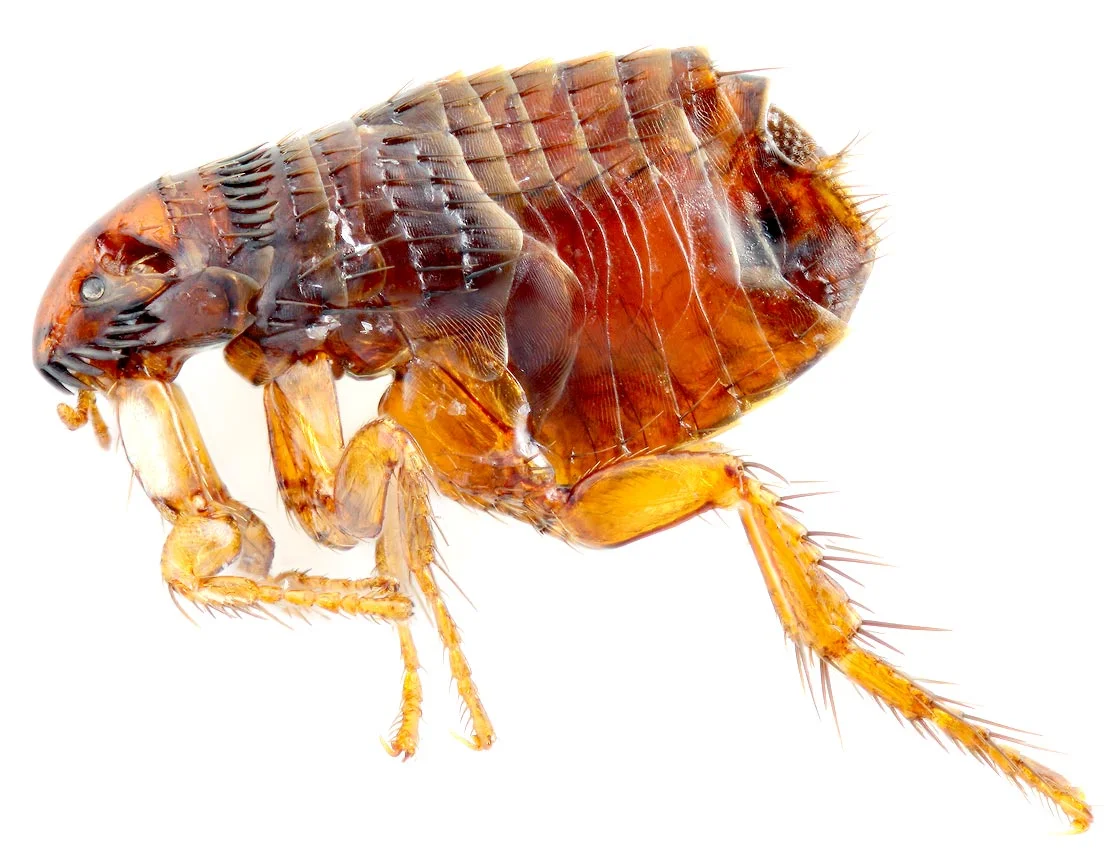
Identification: Cat flea, the dominant flea species on both cats and dogs in Middle Tennessee, regardless of host. Adults are 1-2 mm long, laterally compressed (flattened side to side for movement through fur), dark reddish-brown, and capable of jumping up to 13 inches vertically. The characteristic pronotal and genal ctenidia (comb-like rows of backward-facing spines on the thorax and cheek) distinguish Ctenocephalides felis from dog flea (C. canis), cat flea ctenidia are nearly equal in length, while dog flea genal ctenidia are shorter. Adults require a blood meal within hours of host contact.
Life cycle: Four stages: egg, larva, pupa, adult. Female lays 20-50 eggs per day directly on the host; eggs fall into carpet, bedding, and lawn thatch. Larvae hatch in 2-14 days and feed on organic debris and adult flea feces ("flea dirt") in the environment. Pupae spin cocoons and can remain dormant for months, emerging in response to vibration, heat, and CO2. Full cycle completes in 2-3 weeks under warm, humid conditions, Middle Tennessee's summer humidity accelerates development significantly.
Damage signs: Intense itching and scratching in pets; small red bite clusters on humans concentrated on ankles and lower legs. "Flea dirt", dark pepper-like specks that turn red when wet, in pet bedding and along baseboards. Tapeworm (Dipylidium caninum) transmission through ingestion of infected fleas during grooming. Heavy infestations in unoccupied homes can produce explosive adult emergence when humans re-enter after dormant pupae detect movement.
Treatment window: Year-round indoors. Outdoor populations build from May through October in Middle Tennessee; the humid warm months of June through September are peak infestation season.
UT-recommended approach: Integrated management requires simultaneous treatment of the pet (veterinarian-prescribed adulticide), the indoor environment (IGR plus adulticide aerosol targeting carpet, furniture gaps, and pet resting areas), and outdoor harborage zones (shaded, moist areas beneath decks and shrubs where pets rest). Vacuuming before treatment stimulates pupal emergence. A single treatment cycle is rarely sufficient, a follow-up application 10-14 days later targets newly emerged adults from surviving pupae.
Quick Facts
- Common Name
- Flea
- Scientific Name
- Ctenocephalides felis
- Category
- Household Pest
- Region
- Middle Tennessee