About Bullfinches
Bullfinches (Pyrrhula pyrrhula)
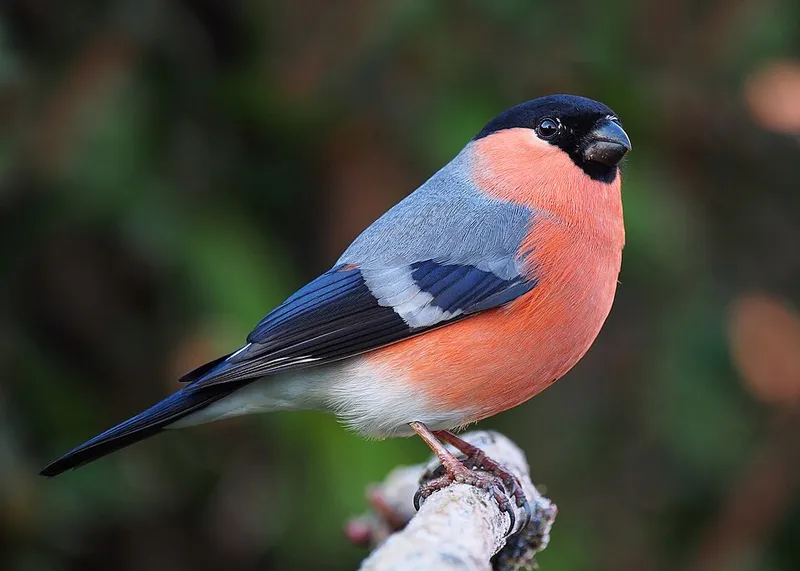
Identification: Stocky, thick-billed finch, 6-6.5 inches. Male is unmistakable: jet-black cap and face, bright rose-red breast and cheeks, blue-gray back, white rump conspicuous in flight, and black wings with a single white wing bar. Female shares the same cap, rump, and wing pattern but replaces the red with warm pinkish-buff. The thick, rounded bill is adapted for extracting seeds from buds and fruit. Note: bullfinch is a Eurasian species native to Europe and Asia; sightings in Middle Tennessee represent escaped cage birds rather than established wild populations.
Life cycle: In its native range, breeds April through July with 1-2 clutches of 4-5 eggs. Non-migratory in Europe. Tennessee occurrences are isolated escapes from the aviculture trade and do not represent a self-sustaining local population. No established breeding records for Tennessee.
Damage signs: Systematic removal of fruit tree and ornamental shrub buds in late winter, a bullfinch can strip an entire cherry or apple branch of its flower buds before bloom, causing complete crop failure on small ornamental trees. The rounded bill leaves a distinctive clean-cut nip at the base of each bud. Damage resembles late frost injury in appearance but occurs in patterns along branch tips rather than uniformly across the canopy.
Treatment window: Late winter (January through March) when dormant buds are the primary available food source and before natural food alternatives become abundant.
UT-recommended approach: Bird netting draped over individual small fruit trees or ornamental shrubs provides physical exclusion during the vulnerable bud-swell period. Visual deterrents (reflective tape, moving objects) offer short-term displacement. Because Tennessee occurrences are escaped exotics rather than migratory native species, wildlife authority should be consulted regarding applicable regulations before any trapping or removal.
Quick Facts
- Common Name
- Bullfinches
- Scientific Name
- N/A
- Category
- Household Pest
- Region
- Middle Tennessee