About Chigger
Chigger (Eutrombicula alfreddugesi)
Identification: North American chigger, the larval stage of a trombiculid mite. Adults and nymphs are free-living soil predators and cause no harm; only the six-legged larva (approximately 0.15-0.3 mm, barely visible to the naked eye as an orange-red speck) feeds on vertebrates including humans. Larvae aggregate in vegetation at knee height or lower, attaching to passing hosts. They do not burrow into skin, they inject digestive saliva that liquefies skin cells, then feed on the resulting stylostome (hardened feeding tube). Middle Tennessee's warm, humid summers and tall unmowed grass provide ideal habitat.
Life cycle: Eggs hatch in soil in spring when soil temperatures exceed 60°F. Larvae seek hosts in grass and low vegetation, feed for 3-5 days, then drop off to molt into non-parasitic nymphs and adults. One to three generations per year in Tennessee depending on temperature. Activity peaks June through early October; larvae concentrate in vegetation margins, ground cover edges, and areas of tall grass along fence lines.
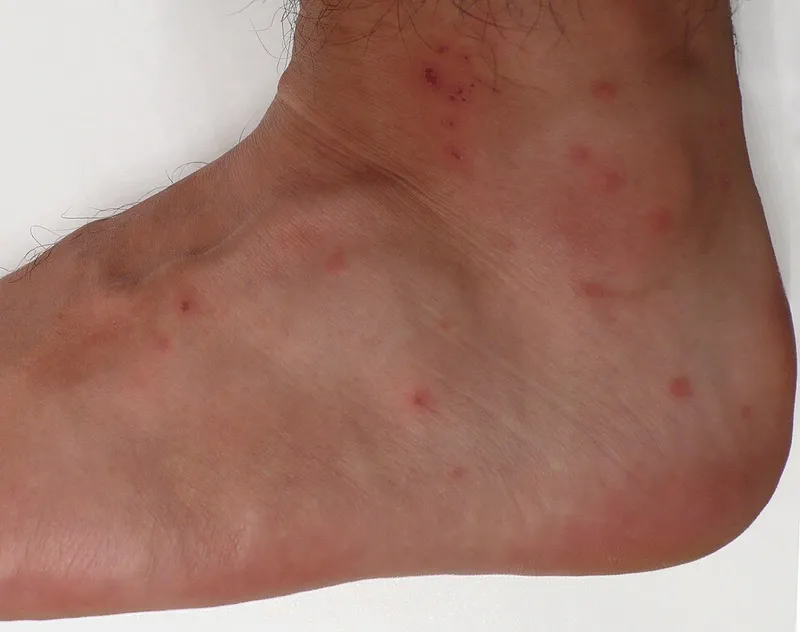
Damage signs: Intensely itchy red welts appearing 3-6 hours after exposure, concentrated at skin constriction points, waistband, sock lines, armpits, and behind the knees where clothing is tight. Welts are not caused by embedded mites (contrary to common belief) but by the host's reaction to the stylostome remaining after the larva detaches. Scratching can introduce secondary bacterial infection.
Treatment window: June through early October in Middle Tennessee. Peak exposure risk occurs in unmowed grass, weedy margins, and woodland edges during warm, humid weather.
UT-recommended approach: DEET-based repellent applied to clothing and skin at the sock/boot line and waistband before entering infested vegetation is the primary personal protection. Permethrin-treated clothing provides durable protection through multiple washings. Landscape management, mowing turf regularly, clearing ground cover margins, reducing leaf litter, eliminates larval habitat. Broadcast bifenthrin applications to turf edges and vegetation borders in June suppress larval populations in high-traffic yards.
Quick Facts
- Common Name
- Chigger
- Scientific Name
- Eutrombicula alfreddugesi
- Category
- Household Pest
- Region
- Middle Tennessee