About Catbirds
Catbirds (Dumetella carolinensis)
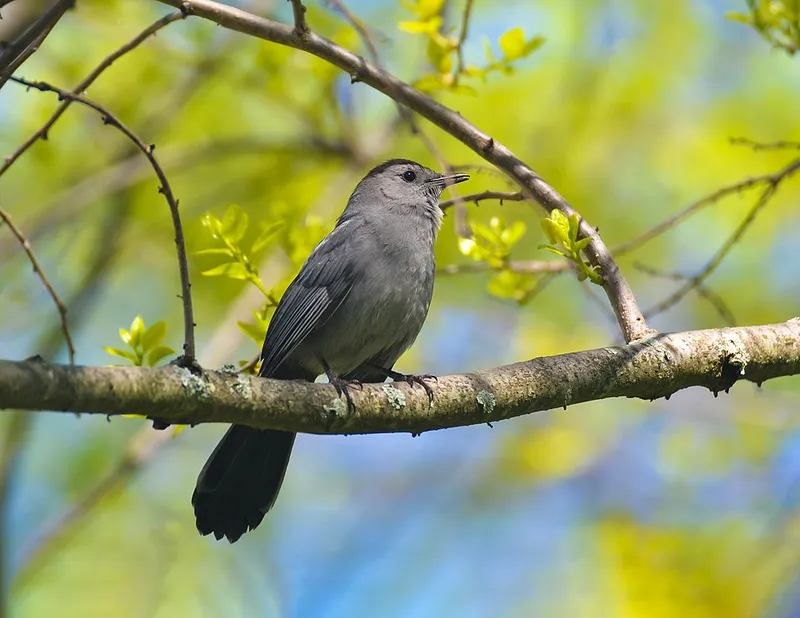
Identification: Gray catbird, medium thrush-relative, 8-9 inches. Uniformly slate gray overall with a black cap, a long black tail frequently cocked upward, and a distinctive chestnut-rust patch under the tail (undertail coverts) that is diagnostic when visible. Bill is slender and slightly downcurved, suited for fruit and insect foraging. The mewing cat-like call that gives the species its name is unmistakable. Summer resident in Middle Tennessee, arriving in April and departing by October; uncommon in winter.
Life cycle: Breeds May through August with 1-2 clutches of 3-5 eggs in dense shrub tangles. Nest is a bulky cup of twigs, bark, and leaves concealed in thick vegetation, catbirds favor dense landscaping borders, overgrown hedge lines, and bramble thickets. Known to puncture eggs of brown-headed cowbirds that attempt brood parasitism.
Damage signs: Fruit consumption on ornamental shrubs and garden berry crops, blueberries, raspberries, serviceberries, and hollies are particularly targeted. Catbird feeding damage differs from cedar waxwing damage in that catbirds tend to feed singly or in pairs rather than in flocks, and they consume fruit more selectively over a longer period. Occasional structural nest debris in hedge plantings. Impact is generally lower than colonial species.
Treatment window: Berry ripening periods from June through September. Dense shrub nesting requires no intervention unless in a high-traffic structural location.
UT-recommended approach: Bird netting over individual fruit-bearing shrubs during the ripening window is the most reliable exclusion for blueberries and similar crops. Reflective scare tape provides temporary displacement. Because catbirds are migratory native species protected under the Migratory Bird Treaty Act, exclusion rather than lethal control is the standard management approach.
Quick Facts
- Common Name
- Catbirds
- Scientific Name
- N/A
- Category
- Household Pest
- Region
- Middle Tennessee