About Blue Jays
Blue Jays (Cyanocitta cristata)
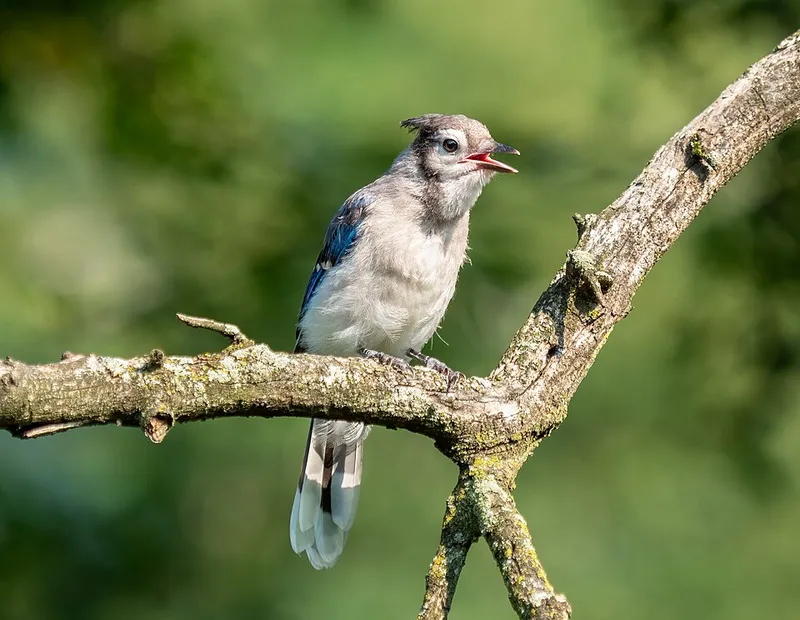
Identification: Large, crested corvid, 9-12 inches. Vivid blue upper parts with a white face and underside; bold black necklace across the throat and upper breast; black barring and white tips on the wings and tail. The prominent blue crest is raised when agitated and flattened when relaxed. Loud, varied vocalizations include a harsh "jay-jay" alarm call and a convincing red-shouldered hawk mimicry call used to clear feeders. Year-round resident throughout Middle Tennessee.
Life cycle: Breeds April through July with a single clutch of 3-6 eggs. Monogamous and territorial during breeding; gregarious and nomadic outside of it. Fall migration creates large transient flocks moving through the I-65 corridor in October. Acorn caching is a primary fall behavior, blue jays are significant dispersers of oak species.
Damage signs: Aggressive displacement of smaller birds at feeders; dominant over most songbirds. Platform and hopper feeders with large peanuts and sunflower seeds attract and concentrate blue jays. Nest-raiding of other cavity nesters and open-cup nesters during breeding season. Acorn caching creates hundreds of small soil excavations across turf and planting beds in fall. Stripping of ripening corn and sunflower in garden settings.
Treatment window: Feeder domination is year-round but most intense in fall and winter. Garden crop raiding concentrates in August through October. Nest-raiding aggression peaks in May through June.
UT-recommended approach: Small-port tube feeders physically exclude blue jays while allowing smaller songbirds to feed. Caged feeders with a mesh opening sized to exclude large-bodied birds are effective. Relocating corn or sunflower plantings away from established jay territories reduces garden pressure. Blue jays are protected under the Migratory Bird Treaty Act; management is limited to exclusion and habitat design.
Quick Facts
- Common Name
- Blue Jays
- Scientific Name
- N/A
- Category
- Household Pest
- Region
- Middle Tennessee