About Solomon’s Seal
Solomon's Seal (Polygonatum odoratum)
Fragrant Solomon's Seal, Angular Solomon's Seal
Part to full shade, medium to moist, prefers humus-rich loam but tolerates clay with organic matter, pH 5.5-7.0.
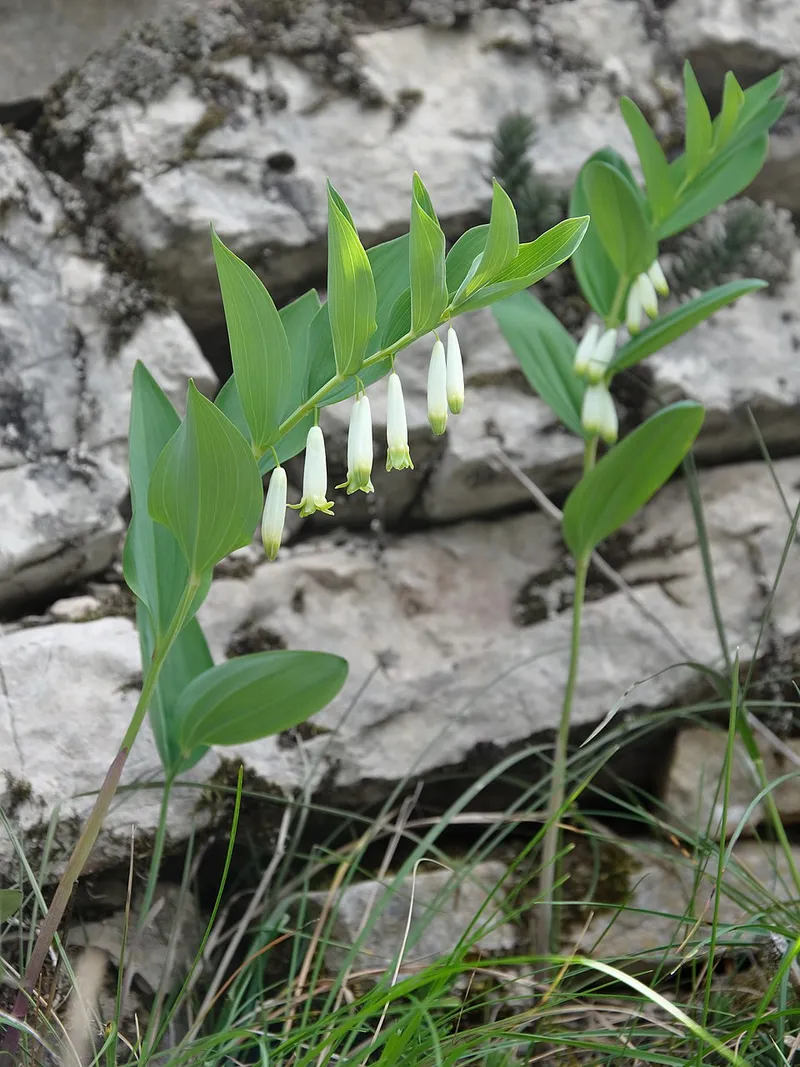
45-90 cm tall (species); arching stems with alternate oval leaves; pendulous, tubular white flowers 1.5-2 cm long, fragrant, in pairs from leaf axils in May; blue-black berries in fall. Spreads by rhizomes to form colonies. Growth rate medium.
Germination Code L (double dormancy, warm then cold stratification); division of rhizomes in early spring is the preferred propagation method.
Native region: Not native to Tennessee; ornamental introduction from Europe and Asia. The native American species is Polygonatum biflorum, which is similar in appearance and widely found in Tennessee woodlands.
Distinct from native P. biflorum by its more angular stems (odoratum means fragrant, and the flowers are more noticeably scented) and slightly broader leaves. Both species perform similarly in Middle Tennessee shaded gardens. In the humid woodland gardens and shaded foundation beds common around Columbia, P. odoratum establishes readily and slowly expands into colonies that suppress weed seed germination. Solomon's seal sawfly (Phymatocera aterrima) larvae can skeletonize leaves in late spring, handpick larvae or apply insecticidal soap at first sign. Rhizomes are toxic if consumed in quantity.
Quick Facts
- Common Name
- Solomon’s Seal
- Scientific Name
- Polygonatum odoratum
- Plant Type
- Tree
- Region
- Middle Tennessee