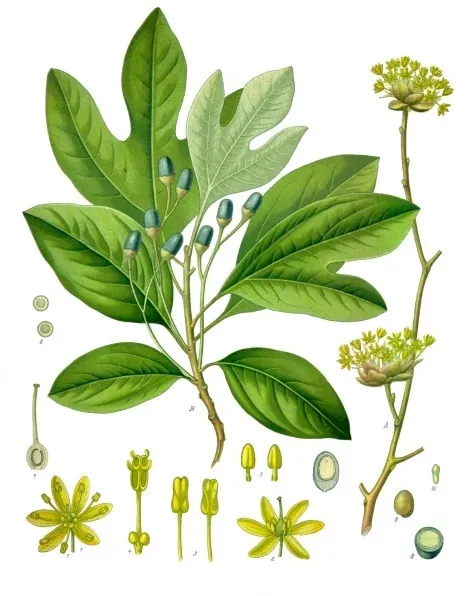
About Sassafras
Sassafras (Sassafras albidum)
Full sun to light shade, medium to moderately dry moisture, prefers rich loamy soil but tolerates sandy loam, sandy, and clay soils; can develop root rot in wet clay; acidic pH 4.5-6.5.
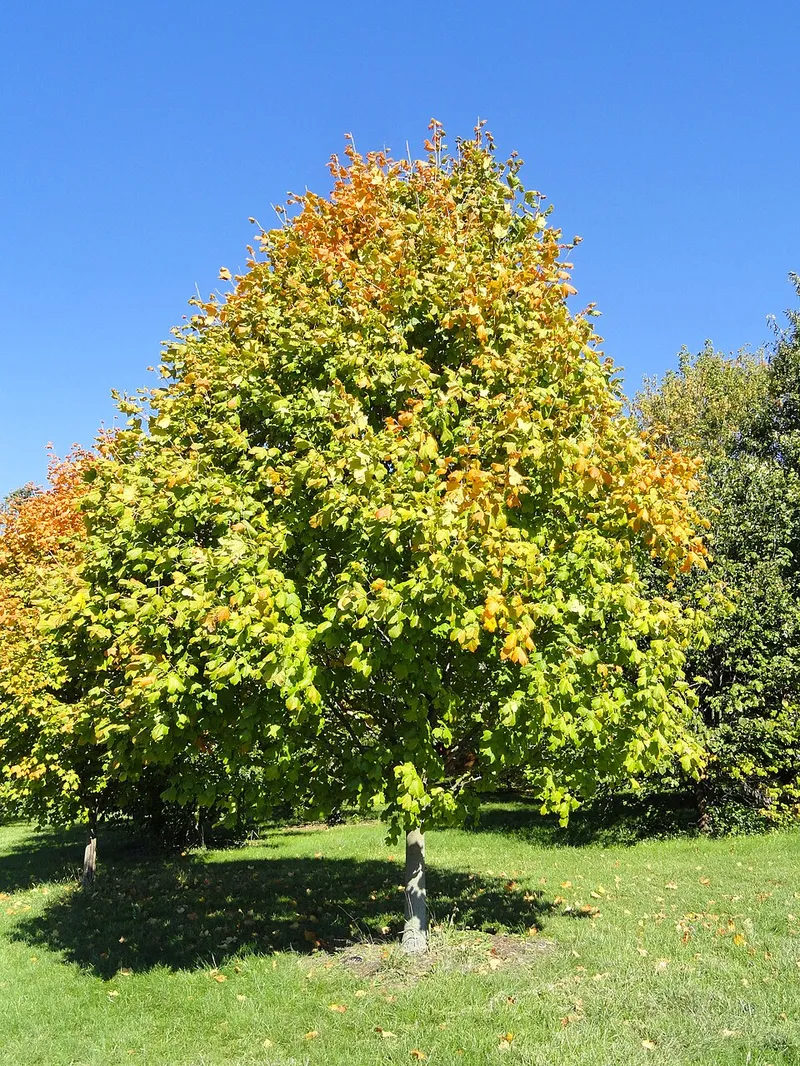
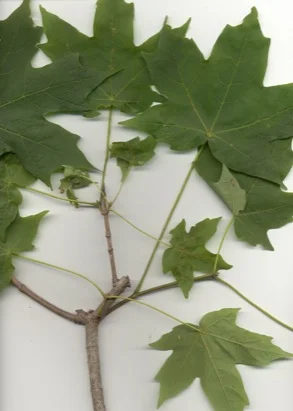
30-60 feet tall by 25-40 feet spread; inconspicuous greenish-yellow flowers in small drooping clusters in early spring before leaves; blue-black fruits 12 mm on bright scarlet stems in September; three distinct leaf shapes (oval, mitten, and three-lobed) occurring on the same tree. Growth rate moderately fast. May sucker from roots to form thickets.
Native region: Statewide in Tennessee in second-growth woods, old fields, and woodland edges; a common colonizer of disturbed ground throughout Maury County and the Highland Rim.
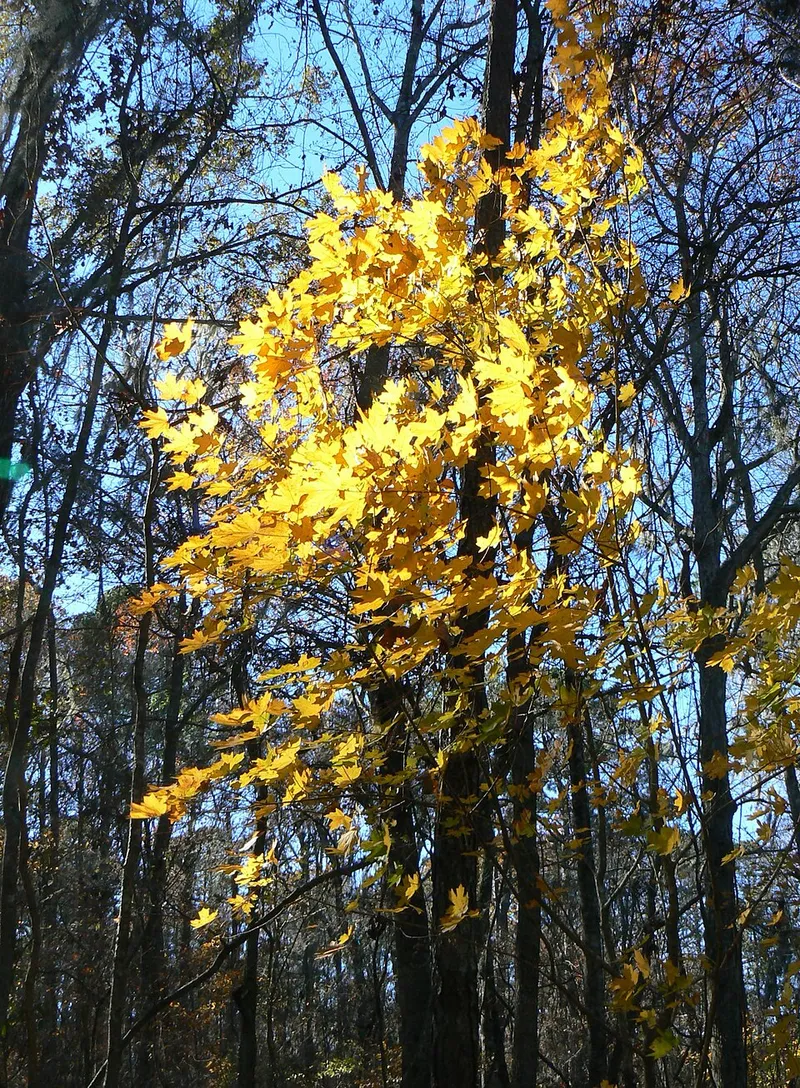
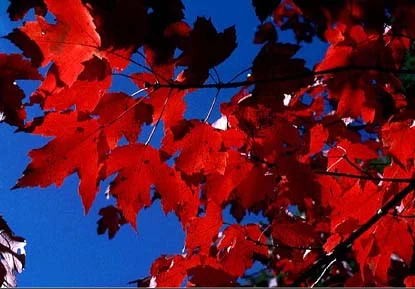
S. albidum is one of Middle Tennessee's most distinctive native trees, immediately identifiable in fall by the combination of orange, purple, and scarlet foliage and the aromatic, spicy scent of the crushed leaves, bark, and roots. The orange-brown, alligator-textured bark on mature trunks is a reliable winter identification feature. All parts are aromatic; root bark was the original flavoring for root beer until safrole was identified as a potential carcinogen and removed from commercial use. Dioecious, both male and female trees required for fruit production, though only some female trees fruit reliably. Root suckers can become problematic in lawn edges; mow or cut back regularly to contain spread. No significant pest or disease problems under typical Middle Tennessee conditions.
Quick Facts
- Common Name
- Sassafras
- Scientific Name
- Sassafras albidum
- Plant Type
- Tree
- Region
- Middle Tennessee