About Pagoda Dogwood
Pagoda Dogwood (Cornus alternifolia)
Part sun to light shade, medium to moderately moist moisture, prefers rich well-drained loam, tolerates clay with good drainage, pH 4.5-6.5.
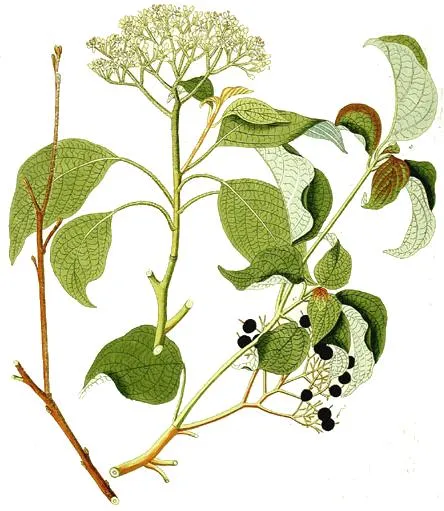
15-25 feet tall by 20-32 feet wide; small, creamy white flowers in flat-topped cymes in May-June; fruit is a dark blue-black drupe 6-8 mm on red pedicels, ripening July-September. Growth rate slow to medium. Branches arranged in horizontal tiers, the origin of the common name.
Native region: Middle and East Tennessee, primarily on moist, well-drained slopes and ravine margins; less frequent than flowering dogwood in Middle Tennessee.
Cornus alternifolia is the only alternate-leaved dogwood native to eastern North America, all other native dogwoods have opposite leaves, making this a reliable identification feature. The tiered, spreading branching habit creates strong horizontal structure in woodland garden settings. Like flowering dogwood (C. florida), it is an understory species and does not perform well in full afternoon sun in Middle Tennessee's summer heat; west-facing exposures cause leaf scorch and dieback. Dogwood anthracnose (Discula destructiva) affects both species, though C. alternifolia is generally considered less susceptible. The dark fruit is a high-fat food source for migratory birds in late summer and fall, including wood thrush and American robin. Provide consistent moisture during the first two growing seasons in Middle Tennessee clay soils.
Quick Facts
- Common Name
- Pagoda Dogwood
- Scientific Name
- Cornus alternifolia
- Plant Type
- Tree
- Region
- Middle Tennessee