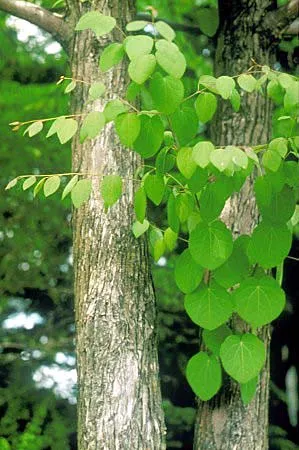
About Katsura Tree
Katsura Tree (Cercidiphyllum japonicum)
Full to part sun, moist to well-drained, prefers organically rich loam but tolerates clay loam with good drainage, pH 5.5-7.0.
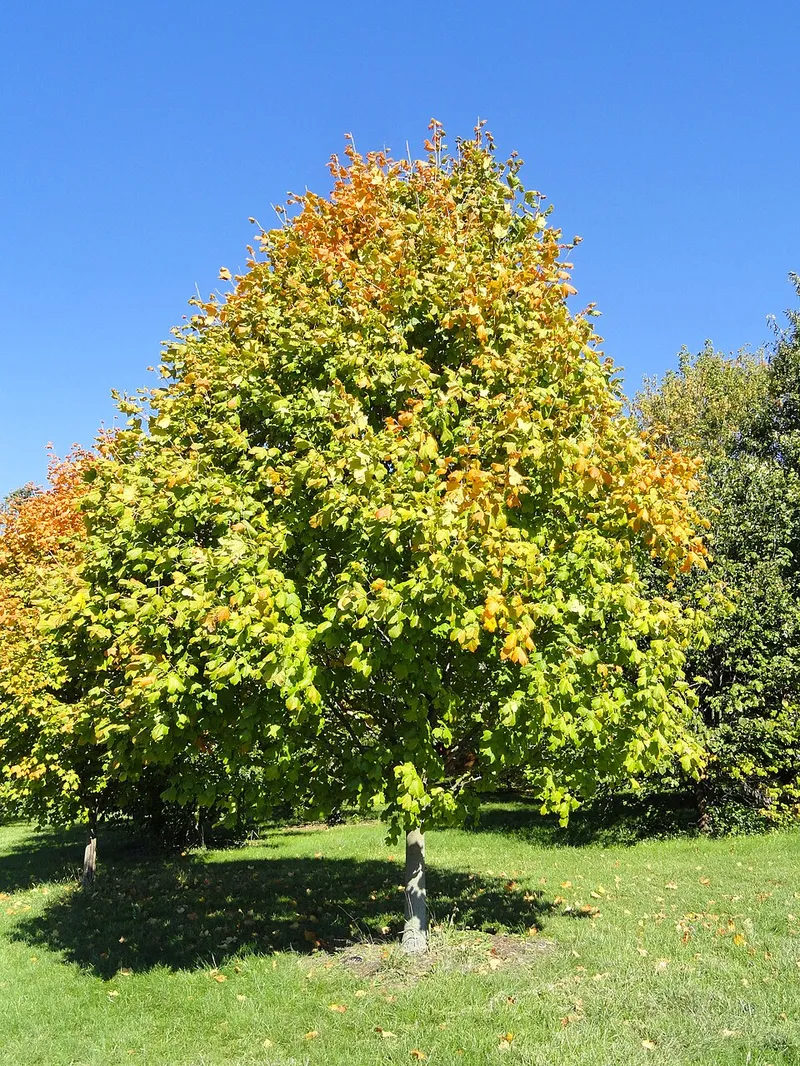
40-60 feet tall by 25-40 feet wide; dioecious, male and female flowers appear in early spring before leaf emergence; both are small and petal-less; fruit is a small pod ripening in fall. Fall color is yellow to apricot-orange with a notable caramel-cotton candy fragrance from senescent leaves.
Native region: Not native to Tennessee; ornamental introduction from China and Japan.
Cercidiphyllum japonicum performs reliably in Zone 6b/7a when sited in consistently moist soil, the primary failure mode in Middle Tennessee is drought stress during establishment on compacted clay sites where roots cannot access deeper moisture. Summer wilting on hot afternoons is characteristic even in established specimens and does not indicate irreversible stress; consistent irrigation through the first two growing seasons is critical. UT Extension mulching guidelines recommend a 7.6-10.2 cm organic mulch ring at the drip line to moderate soil temperature and retain moisture in Tennessee's humid-subtropical summers. Scale insects and canker diseases documented in UT Extension shade tree publications occasionally affect stressed specimens; healthy trees on appropriately moist sites rarely have serious pest problems. Fall color and fragrance are the principal ornamental attributes; plant where air circulation carries the scent.
Quick Facts
- Common Name
- Katsura Tree
- Scientific Name
- Cercidiphyllum japonicum
- Plant Type
- Tree
- Region
- Middle Tennessee