About Japanese Yew
Japanese Yew (Taxus cuspidata)
Spreading Japanese Yew
Full sun to full shade, moist to well-drained, tolerates clay loam but requires good drainage, pH 5.5-7.5; will not tolerate waterlogged soils.
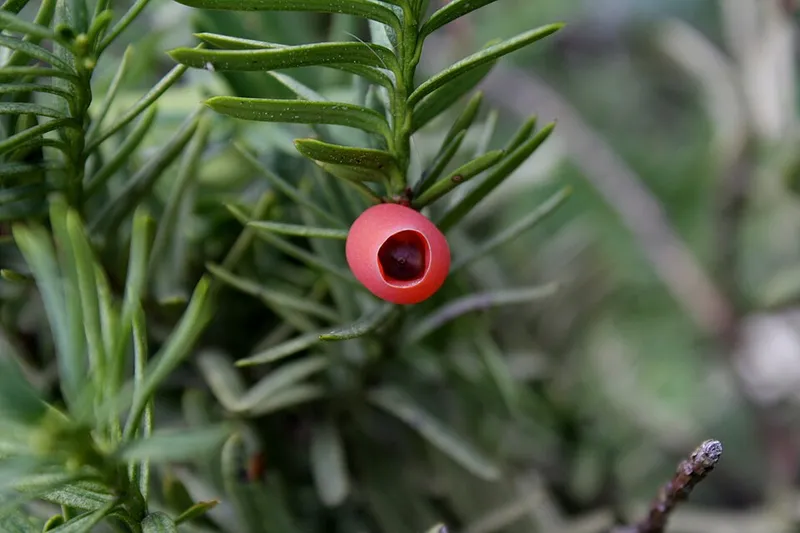
10-40 feet tall (species form) or 2-4 feet tall (spreading cultivars); dioecious, female plants produce fleshy red arils 8-10 mm diameter in fall, each surrounding a single hard seed. Growth rate slow. Evergreen needled shrub to small tree.
Native region: Not native to Tennessee; ornamental introduction from Japan.
Distinct from T. baccata (English yew) by its two-ranked, blunt-tipped needles and greater cold hardiness. T. cuspidata tolerates Middle Tennessee's winters more reliably than English yew. The critical cultural requirement is drainage: roots die within days in saturated soil, yet the plant looks healthy for weeks before collapse, many landscape losses are attributed to this delayed symptom. All parts except the red aril flesh are highly toxic, seeds, bark, needles, and stem contain taxine alkaloids lethal to horses, cattle, and children in small quantities. Bagworms cause defoliation on exposed specimens; inspect for bag clusters in late summer and remove by hand. Mealybugs and scale can establish on stressed plants. Deer browse yew heavily where populations are high, making protection necessary in suburban edge zones.
Quick Facts
- Common Name
- Japanese Yew
- Scientific Name
- Taxus cuspidata
- Plant Type
- Tree
- Region
- Middle Tennessee