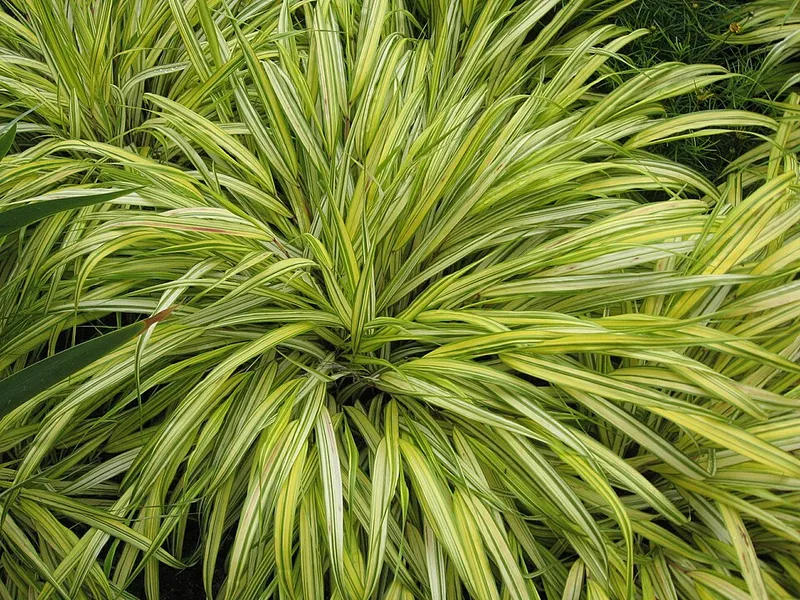
About Japanese Forest Grass
Japanese Forest Grass (Hakonechloa macra)
Hakone Grass
Part to full shade, medium to moist, prefers fertile, humus-rich, well-drained loam, pH 5.5-7.0; intolerant of waterlogged conditions or full-day sun.
30-50 cm tall by 45-60 cm wide; warm-season grass forming gracefully cascading mounds; inconspicuous flower panicles in late summer; foliage turns bronze-orange in fall. Growth rate slow, eventually spreading by short rhizomes into clumps.
Native region: Not native to Tennessee; ornamental introduction from Japan (Mt. Hakone region).
H. macra is among the most widely used shade ornamental grasses in American horticulture. The golden-variegated cultivar 'Aureola' is the most commonly sold selection in Middle Tennessee nurseries. This species is genuinely shade-dependent, more than a half-day of direct sun in Zone 7a bleaches the foliage and causes tip-scorch in summer heat; afternoon shade is non-negotiable. In Columbia's clay-heavy soils, amend beds with significant organic matter before planting; poorly drained clay does not suit this species. Slow establishment rate is the most common gardener complaint, plants may show minimal spread for 2-3 seasons before filling in. No significant insect or disease problems in properly sited plantings. Attracts UT Extension attention as a reliable ornamental grass for the shaded perennial border.
Quick Facts
- Common Name
- Japanese Forest Grass
- Scientific Name
- Hakonechloa macra
- Plant Type
- Tree
- Region
- Middle Tennessee