About Eastern White Pine
Eastern White Pine (Pinus strobus)
Full to part sun, medium to dry moisture, prefers fertile loam but tolerates coarse to fine loams and loamy sand; strongly acid to neutral pH 4.5-7.0; does not tolerate clay or compacted soils.
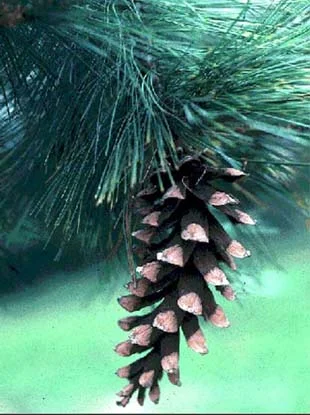
50-80 feet tall by 20-40 feet wide; needles in bundles of 5, soft, blue-green, 7-14 cm long; cylindrical tan-brown cones 15-20 cm. Growth rate fast, one of the fastest-growing landscape pines.
Germination Code C (cold stratification, 60 days); easy from seed.
Native region: Eastern half of Tennessee and isolated counties of the western Highland Rim and Central Basin; most concentrated in the Cumberland Plateau and Ridge and Valley provinces.
Distinct from loblolly pine by its 5-needle fascicles (loblolly has 3), softer texture, and northern affinities. In Middle Tennessee, P. strobus is at its southern climate limit, the combination of heavy clay soils and summer heat causes rapid decline and often death within a few years of planting. White pine blister rust (Cronartium ribicola) is a potentially lethal bark disease; white pine weevil (Pissodes strobi) kills terminal shoots and causes forked, deformed leaders. Both are documented by UT Extension on Tennessee specimens. This species performs substantially better in the cooler, better-drained soils of East Tennessee; Columbia-area plantings in clay should be avoided unless soil is heavily amended.
Quick Facts
- Common Name
- Eastern White Pine
- Scientific Name
- Pinus strobus
- Plant Type
- Tree
- Region
- Middle Tennessee