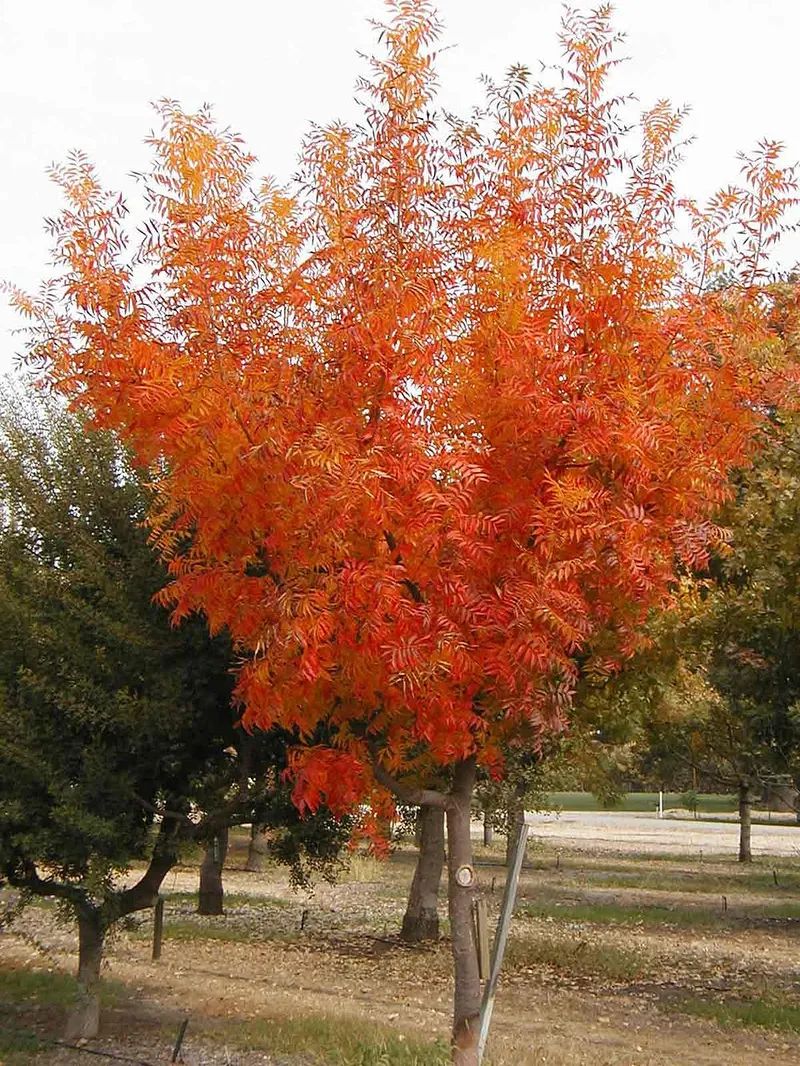
About Chinese Pistache
Chinese Pistache (Pistacia chinensis)
Full sun, medium to dry moisture, drought-tolerant once established, tolerates clay, loam, and alkaline soils, pH 5.5-8.5.
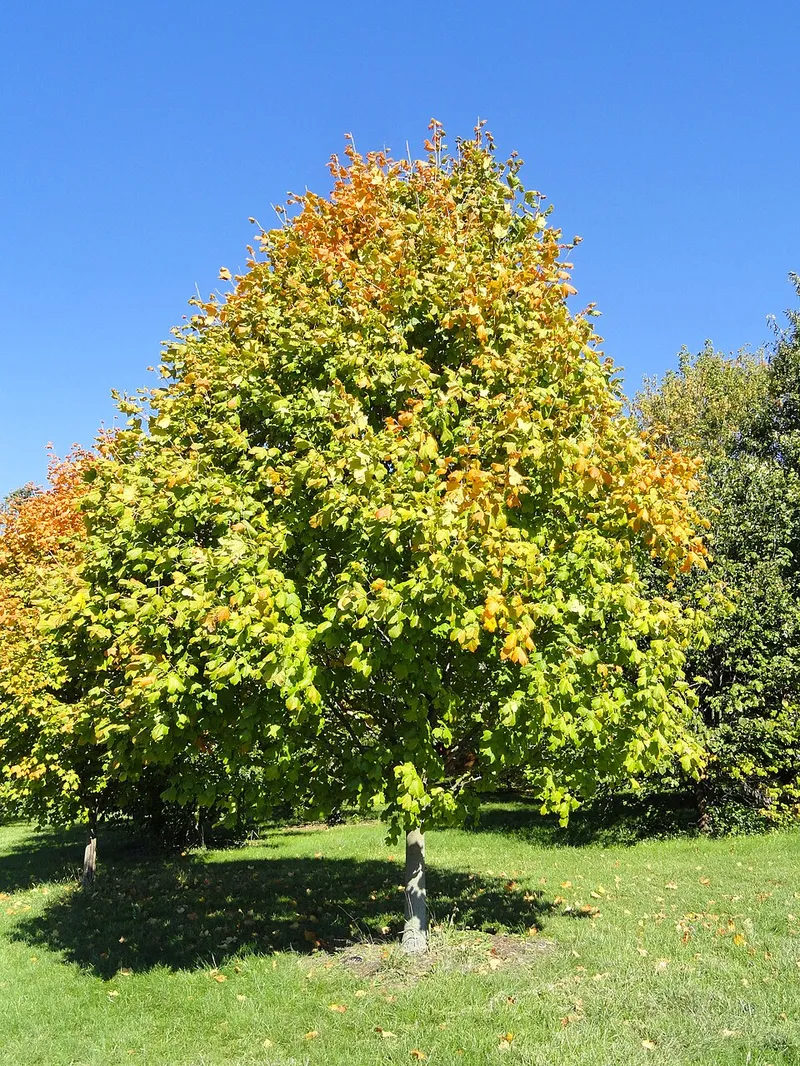
25-35 feet tall by 25-35 feet wide; inconspicuous flowers in spring (dioecious, male and female on separate trees); female trees produce small red to blue drupes in fall. Growth rate medium. Compound leaves with 10-16 leaflets; fall color a reliable orange to flaming red.
Native region: Not native to Tennessee; ornamental introduction from China and Taiwan.
Pistacia chinensis is one of the most reliable shade trees for difficult sites in Middle Tennessee, tolerating the combination of heavy clay, summer drought, and heat that eliminates many ornamental trees from the I-65 corridor. Its fall color rivals that of native maples in good years and is more consistent in the warm-climate Zone 7a conditions of Columbia and surrounding towns, where sugar maple (Acer saccharum) often produces underwhelming color. It is dioecious; male cultivars are preferred for most landscape uses since female trees drop fruit that can be messy and may stain. Bacterial leaf scorch (Xylella fastidiosa) has been documented in Pistacia in the southeastern United States, monitor for interveinal leaf margin browning in late summer. Oak root rot (Armillaria mellea) can kill established trees in waterlogged soils.
Quick Facts
- Common Name
- Chinese Pistache
- Scientific Name
- Pistacia chinensis
- Plant Type
- Tree
- Region
- Middle Tennessee