About Bur Oak
Bur Oak (Quercus macrocarpa)
Mossycup Oak
Full sun, medium to dry moisture, grows in medium loam, silt loam, sandy loam, sandy, rocky, and heavy clay; strongly acid to slightly alkaline pH (4.5-8.0), exceptional pH flexibility.
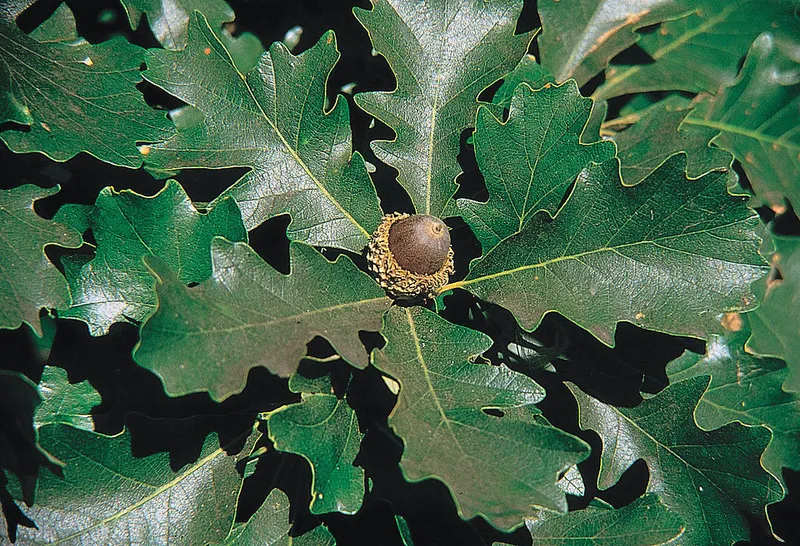
70-80 feet tall by 70-80 feet wide; blooms in spring with drooping yellowish-green male catkins 25-51 mm long and inconspicuous female spikes; tan-brown acorns 19-32 mm long with a distinctively fringed-margined cup (the mossycup) covering half or more of the nut, maturing in a single season. Growth rate slow, 15-20 feet over 20 years.
Germination Code A, with optional C (30-60 days at 41°F) for improved uniformity; deep taproot means direct seeding or deep-container nursery stock only.
Native region: Limited to Coastal Plain and Interior Low Plateau provinces in Tennessee; present in scattered counties of Middle Tennessee on limestone glades and floodplain terraces.
Bur Oak's unique combination of fire-resistance (thick, corky bark on young stems), extreme pH range, and drought tolerance made it the dominant savanna tree across the pre-settlement Interior Low Plateau of Middle Tennessee. The fringed acorn cup is unmistakable and the largest acorn-to-cup ratio of any Tennessee oak. Despite its slow growth, it is genuinely long-lived (300-400 years) and one of the most structurally resilient shade trees available. On Middle Tennessee's alkaline limestone soils where iron chlorosis kills or weakens other oaks, Bur Oak performs without amendment. UT Extension oak disease publications document the standard suite of oak diseases; Bur Oak is notably more resistant to oak wilt than species in the red oak group due to its white oak tyloses response.
Quick Facts
- Common Name
- Bur Oak
- Scientific Name
- Quercus macrocarpa
- Plant Type
- Tree
- Region
- Middle Tennessee