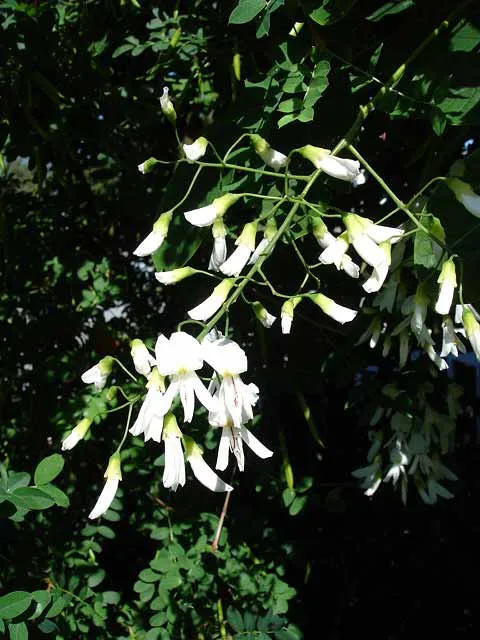
About American Yellowwood
American Yellowwood (Cladrastis kentukea) is a rare, exceptional native tree that thrives in the limestone-rich soils of Middle Tennessee, particularly along the bluffs of the Tennessee River and throughout the Nashville basin. Well-adapted to USDA hardiness zones 6b/7a, this species handles our high humidity and heavy clay better than many non-native ornamentals, provided it is not subjected to standing water. Its deep root system makes it relatively drought-tolerant once established, though it requires specific maintenance to survive the region's frequent ice storms.
Quick facts
- Hardiness: Zones 4-8 (highly stable in Middle TN 6b/7a)
- Light: Full sun (6+ hours) preferred for maximum bloom; tolerates partial afternoon shade
- Mature size: 30-50 feet tall and 40-55 feet wide
- Growth rate: Medium
- Best soil: Well-drained, fertile, loamy to alkaline clay (pH 6.5-7.5)
When to plant In the I-65 corridor, the ideal planting window is mid-autumn (October to November). Planting in the fall allows the deep taproot to establish before the stress of a humid Middle Tennessee summer. Early spring (March) is an acceptable alternative if container-grown specimens are used.
Pruning Yellowwood is a "bleeder," meaning it will leak excessive sap if cut during the spring sap rise. To avoid unsightly staining and potential pest attraction, prune only in mid-summer (July). Structural pruning is critical for young trees to establish a single leader and eliminate tight, V-shaped crotches, which are structurally weak and prone to failure.
Fertilizing Apply a balanced, slow-release fertilizer (such as 10-10-10) in early March before new growth begins. In the limestone-heavy soils of Spring Hill and Columbia, supplemental organic matter like compost or leaf mold is often more effective than high-nitrogen synthetic fertilizers.
Best varieties for our region
- 'Perkins Pink': The most sought-after cultivar in Tennessee, featuring fragrant, soft pink flower panicles instead of the typical white.
Common problems
- Brittle wood: The genus name refers to its brittle branches, which can split under the weight of winter ice or heavy spring winds.
- Alternating blooms: Heavy flowering typically occurs every two to three years; do not expect a massive show every spring.
- Wet feet: While adaptable to clay, it will develop root rot in low-lying areas with poor drainage.
Quick Facts
- Common Name
- American Yellowwood
- Scientific Name
- Cladrastis kentukea
- Plant Type
- Tree
- Region
- Middle Tennessee