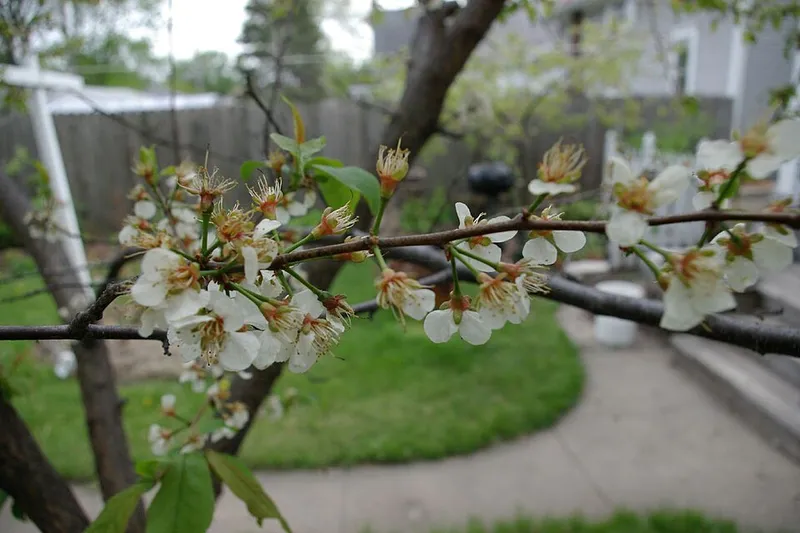
About American Plum
American Plum (Prunus americana)
Wild Plum, American Red Plum
Full to part sun, medium to moderately dry moisture, drought-tolerant once established, tolerates a wide range of soils including clay and loam, pH 5.5-8.0.
15-25 feet tall by 15-20 feet wide; white flowers 15-25 mm across in clusters of 3-5 in March-April before leaf-out; fruit is a round drupe 2-3 cm diameter, ripening yellow to red in July-August. Growth rate medium. Spreads by root suckers to form thickets.
Seed germination requires cold stratification (60-90 days) after cleaning pulp from seed.
Native region: Statewide in Tennessee, most frequent along woodland edges, fence rows, and disturbed areas; abundant in Middle Tennessee on both upland and lowland sites.
Prunus americana is one of the most common native plums in Middle Tennessee, producing an early-season flush of white flowers along roadsides and field edges in March that rivals ornamental cherries. The fruit is edible though tart, used in jams and preserves, and is important mast for white-tailed deer, foxes, and numerous bird species. Its suckering habit makes it unsuitable for formal landscape settings but valuable for erosion control on slopes and for wildlife plantings. Black knot (Apiosporina morbosa), a fungal disease producing swollen, corky black galls on twigs and branches, is common in Middle Tennessee plum populations; prune and destroy infected wood well below visible galls. Plum curculio (Conotrachelus nenuphar) damages fruit.
Quick Facts
- Common Name
- American Plum
- Scientific Name
- Prunus americana
- Plant Type
- Tree
- Region
- Middle Tennessee