About American Beech
American Beech (Fagus grandifolia)
Part to full sun, moist to well-drained, prefers deep rich loam; poorly tolerant of compaction, flooding, or salt; pH 4.5-7.0.
60-80 feet tall by 40-60 feet wide; monoecious, staminate flowers in pendulous globose heads, pistillate flowers in pairs in spring; fruit is a prickly 4-parted bur 1.9-2.5 cm containing 2-3 edible triangular beechnuts, ripening September-October. Growth rate slow.
Germination Code C (cold stratification, 90-120 days); seeds must be kept moist; beechnuts drop viability rapidly if allowed to dry.
Native region: Middle and East Tennessee, primarily on moist, well-drained north- and east-facing slopes; present in scattered counties of the Cumberland Plateau and Eastern Highland Rim.
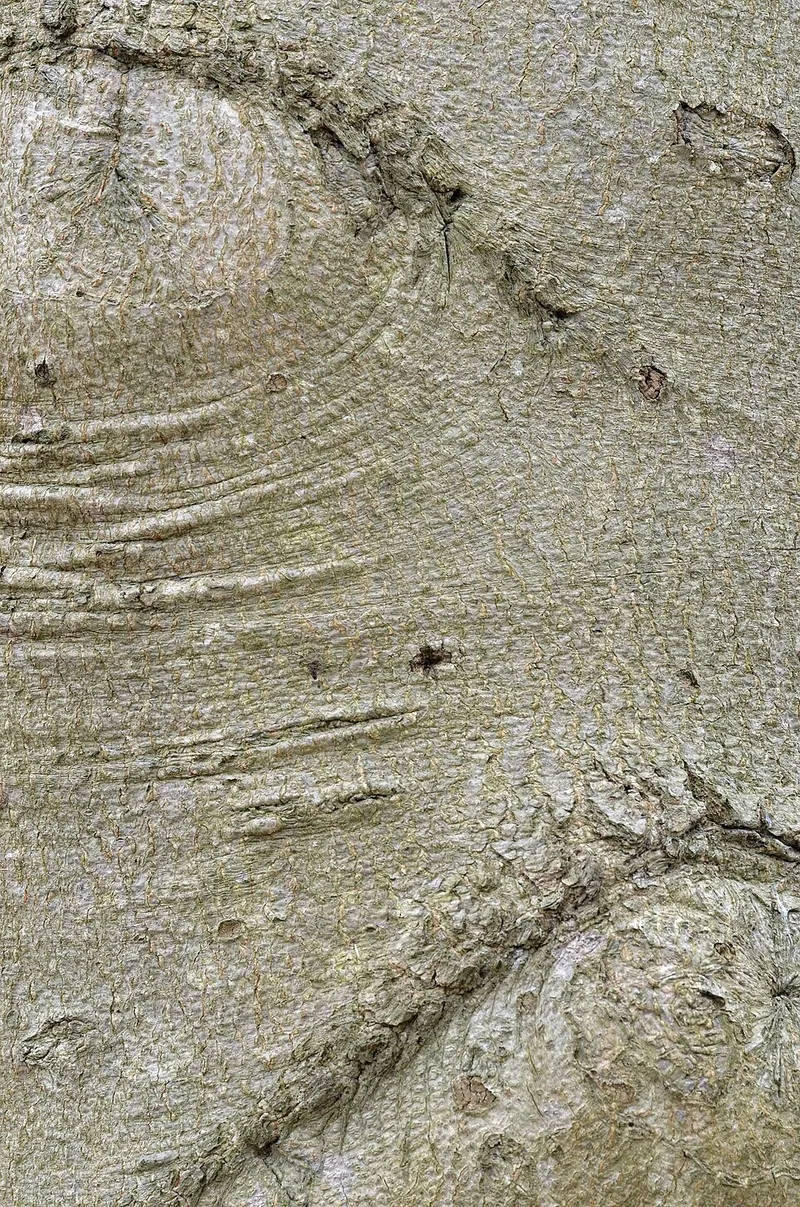
Fagus grandifolia is immediately identified by smooth, silver-gray bark that remains unridged even on old trunks, a rare trait among large eastern hardwoods. Beech Leaf Disease, caused by the foliar nematode Litylenchus crenatae ssp. mccannii, is an emerging threat moving southward through the Appalachians; UT Extension is actively tracking it, and Tennessee populations should be monitored for dark-banded leaf striping and premature defoliation. Root systems are extremely shallow and wide-spreading; lawn mowing over the root zone causes documented injury. Compaction from construction or foot traffic kills roots before visible crown symptoms appear, making site protection during grading essential. Beechnuts have high fat content and are important fall mast for black bear, white-tailed deer, and wood ducks in East Tennessee.
Quick Facts
- Common Name
- American Beech
- Scientific Name
- Fagus grandifolia
- Plant Type
- Tree
- Region
- Middle Tennessee