About False Cypress
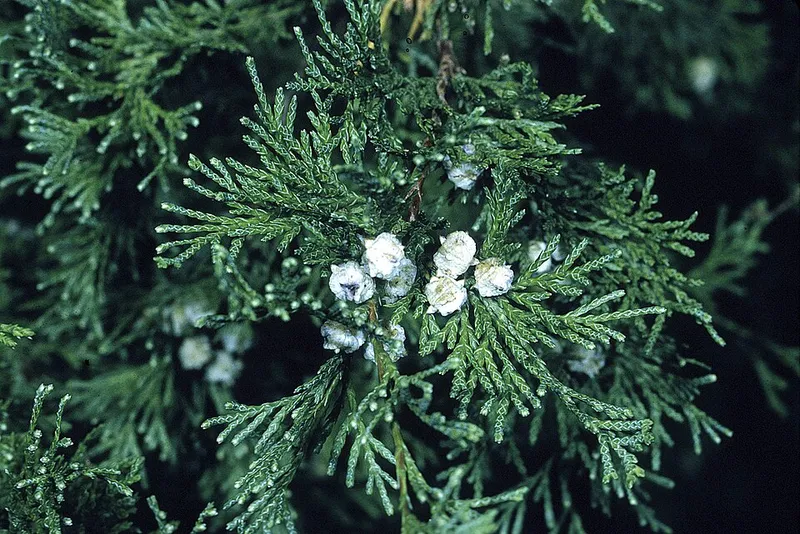
False Cypress (Chamaecyparis pisifera)
Sawara Cypress, Japanese False Cypress
Full to part sun, moderately moist and well-drained, prefers slightly acid to neutral pH 5.5-6.5; tolerates clay if drainage is adequate.
Landscape cultivars commonly sold in Tennessee top out at 5-20 feet; upright species-type selections can reach 20-25 feet over many decades; thread-leaf cultivars ('Filifera', 'Filifera Aurea') typically 6-8 feet; blooms inconspicuous; spreads by seed or cuttings.
Propagation: hardwood cuttings in late autumn or semi-hardwood in summer; seed requires no pretreatment.
Native region: Not native to Tennessee; ornamental introduction from Japan.
Landscape performance in Middle Tennessee varies sharply by cultivar. Dwarf and thread-leaf cultivars are the most common selections and hold their compact form without heavy pruning. The subtropical humidity of Zone 7a makes bagworm (Thyridopteryx ephemeraeformis) the dominant pest concern, inspection each June and hand-removal of early bags prevents defoliation that can kill branch tips permanently. Canker diseases establish more readily on plants stressed by summer drought; consistent soil moisture during establishment reduces susceptibility. False cypress does not regenerate from bare interior wood once stripped of foliage, so over-shearing damages branch structure irreversibly. Prune selectively with hand tools rather than hedge shears.
Quick Facts
- Common Name
- False Cypress
- Scientific Name
- Chamaecyparis pisifera
- Plant Type
- Shrub
- Region
- Middle Tennessee