About Elephant Ear
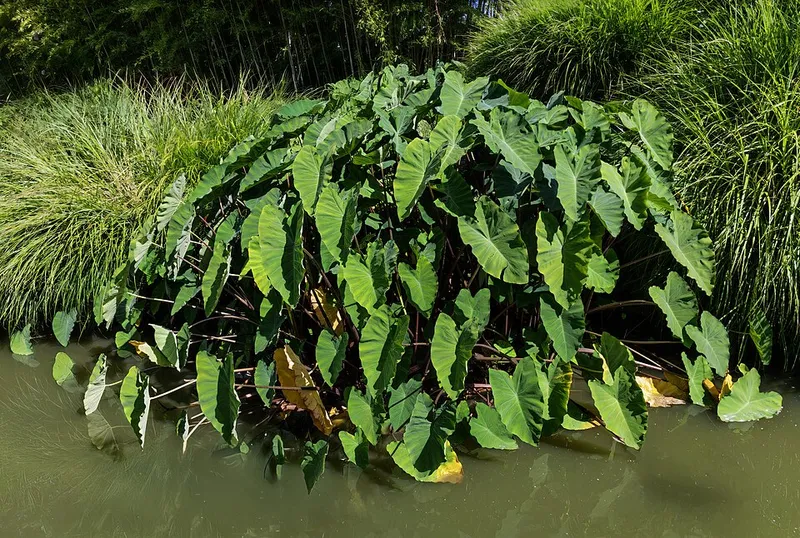
Elephant Ear (Colocasia esculenta)
Taro, Dasheen, Coco Yam
Full sun to part shade, moist to wet; thrives in organically rich soil and tolerates standing water; pH 5.5-7.0.
3-6 feet tall and wide in seasonal cultivation; large peltate leaves 18-36 inches long on long petioles; spreads aggressively by stolons and corms to form dense colonies in wet conditions.
Propagation: divide corms in spring after soil temps exceed 60°F; store corms above 50°F over winter in Middle Tennessee where it is not winter-hardy outdoors.
Native region: Not native to Tennessee; ornamental introduction from tropical Asia and Southeast Asia. Treated as a tender perennial in Zone 6b/7a, dies back to corms at first hard frost.
In Columbia and Middle Tennessee, C. esculenta functions as a warm-season accent plant, growing rapidly once July heat arrives. Corms must be dug after first frost in October or November, cleaned, dried briefly, and stored in barely moist peat at 50-60°F, failure to store results in corm rot. Root-bound corms in containers produce the most dramatic foliage; in-ground plants in saturated sites can spread beyond their intended area within a single season via underground stolons. All plant parts contain calcium oxalate crystals, causing oral irritation if eaten raw. Slugs can damage young emerging leaves in spring; hand-pick or apply iron phosphate bait around corms at emergence.
Quick Facts
- Common Name
- Elephant Ear
- Scientific Name
- Colocasia esculenta
- Plant Type
- Shrub
- Region
- Middle Tennessee