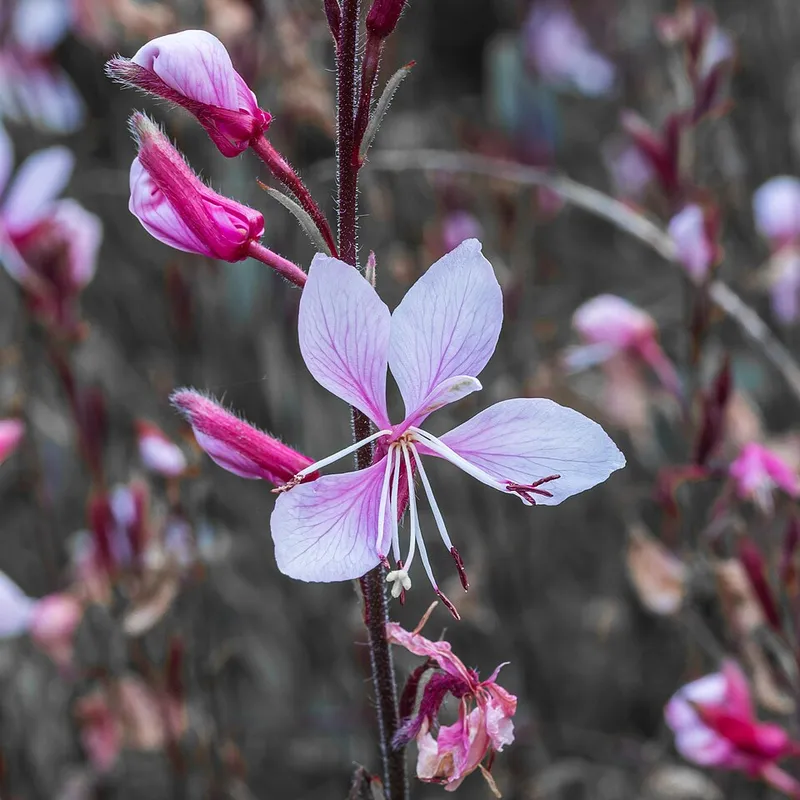
About Wand Flower
Wand Flower (Gaura lindheimeri)
Whirling Butterflies, Lindheimer's Beeblossom · now reclassified as Oenothera lindheimeri
Full sun, dry to moderately dry moisture level, well-drained or sandy soil; tolerates rocky sites; neutral to slightly alkaline pH.
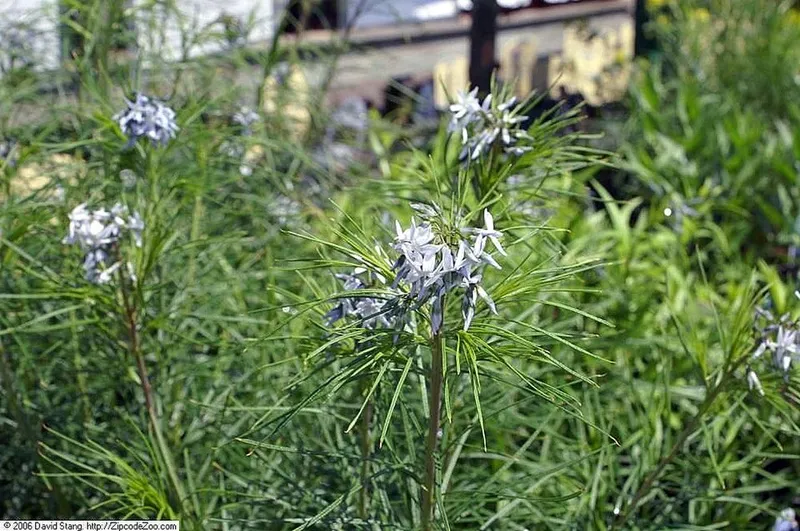
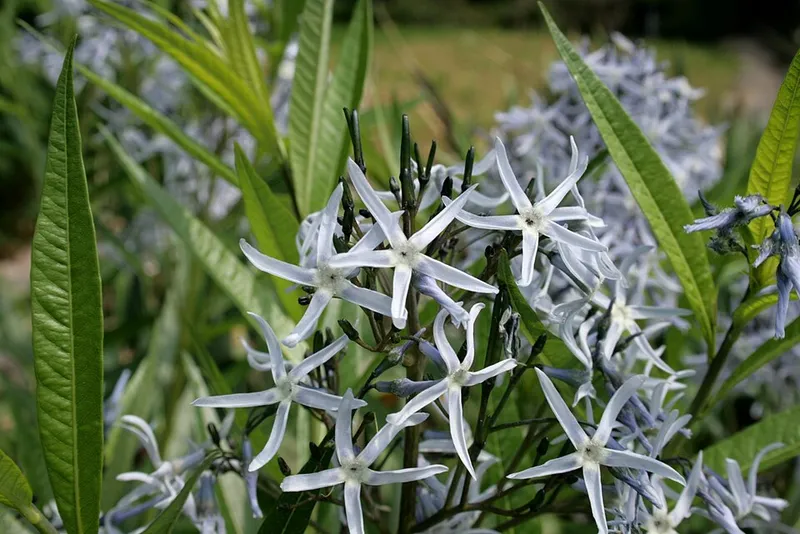
2-4 feet tall, blooms late spring through frost with white or pale pink four-petaled flowers on arching wands; spreads slowly by taproot and self-seeding.
Sow seed directly in fall for spring germination; established plants develop a deep taproot and resent transplanting. Cut back by half in midsummer to encourage fresh growth and extended bloom.
Native region: Not native to Tennessee; ornamental introduction from Texas and Louisiana.
Wand flower is native to the hot, alkaline prairies of central Texas, which makes it unusually tolerant of Middle Tennessee's summer heat and the calcareous clay soils common in the Central Basin around Columbia and Maury County. The airy, butterfly-like flowers move in any breeze and provide a fine texture contrast to bold-leafed companions. The primary failure mode in Middle TN is winter wet: the taproot rots in clay that holds water through December-February. Planting on a slight slope or in an elevated bed significantly improves longevity. Attracts bees and hummingbirds.
Quick Facts
- Common Name
- Wand Flower
- Scientific Name
- Gaura lindheimeri
- Plant Type
- Perennial
- Region
- Middle Tennessee