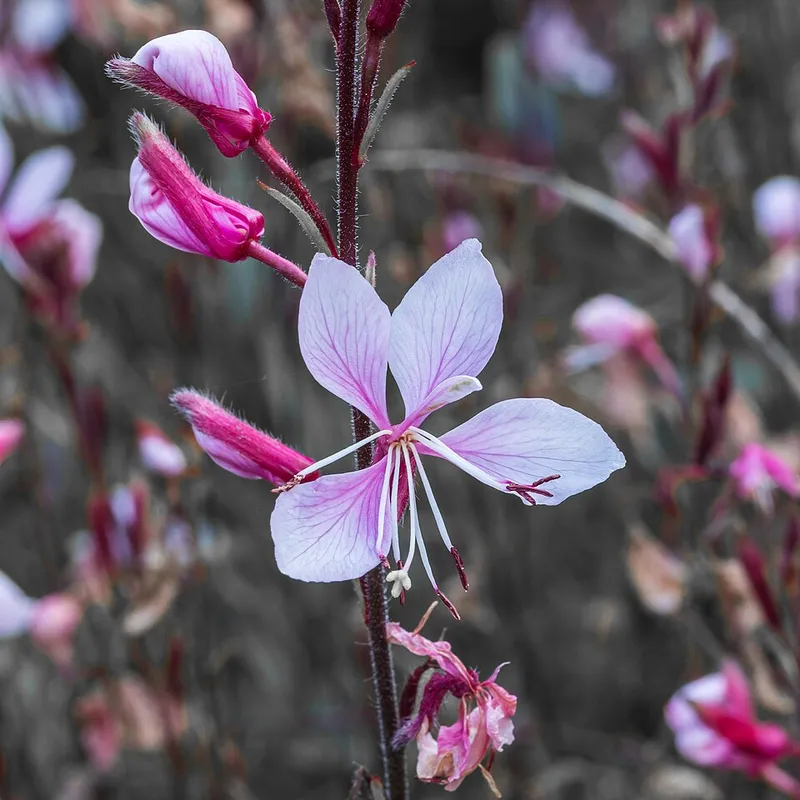
About gaura
Gaura (Oenothera lindheimeri)
Lindheimer's Beeblossom, Whirling Butterflies
Full sun, dry to medium moisture, well-drained sandy or loamy soil; tolerates clay if drainage is adequate; pH 6.0-7.5; drought-tolerant once established via deep taproot.
3-4 feet tall by 2-3 feet wide; blooms late spring through frost (May-October in Middle Tennessee) with delicate white to pink flowers on arching wiry stems; re-seeds readily; spreads by self-seeding but is not aggressively invasive.
Native region: Not native to Tennessee; ornamental introduction from Texas and Louisiana coastal prairies. Note: reclassified from Gaura lindheimeri to Oenothera lindheimeri (evening primrose family).
Gaura is one of the most heat- and drought-tolerant ornamental perennials for Middle Tennessee, thriving in the hot, dry summers along the I-65 corridor where many perennials struggle. The taproot makes transplanting difficult once established, site selection is important. Deadheading is not necessary and may reduce the airy, cloud-like appearance that makes this plant distinctive. In heavy clay soils, raised planting beds or slopes are preferred; crown rot occurs in wet, poorly drained sites. The plants are short-lived (3-5 years) but self-seeding maintains a stand. Pink-flowered cultivars such as 'Siskiyou Pink' and 'Crimson Butterflies' are common; they may revert to white in self-seeded offspring.
Quick Facts
- Common Name
- gaura
- Scientific Name
- Oenothera lindheimeri
- Plant Type
- Perennial
- Region
- Middle Tennessee