About pulmonaria
Pulmonaria (Pulmonaria saccharata)
Bethlehem Sage, Lungwort
Part shade to full shade, medium to moderately moist moisture, humus-rich well-drained loam; tolerates clay if drainage is adequate; pH 5.5-7.0; does not tolerate full sun or dry soil in the Middle Tennessee climate.
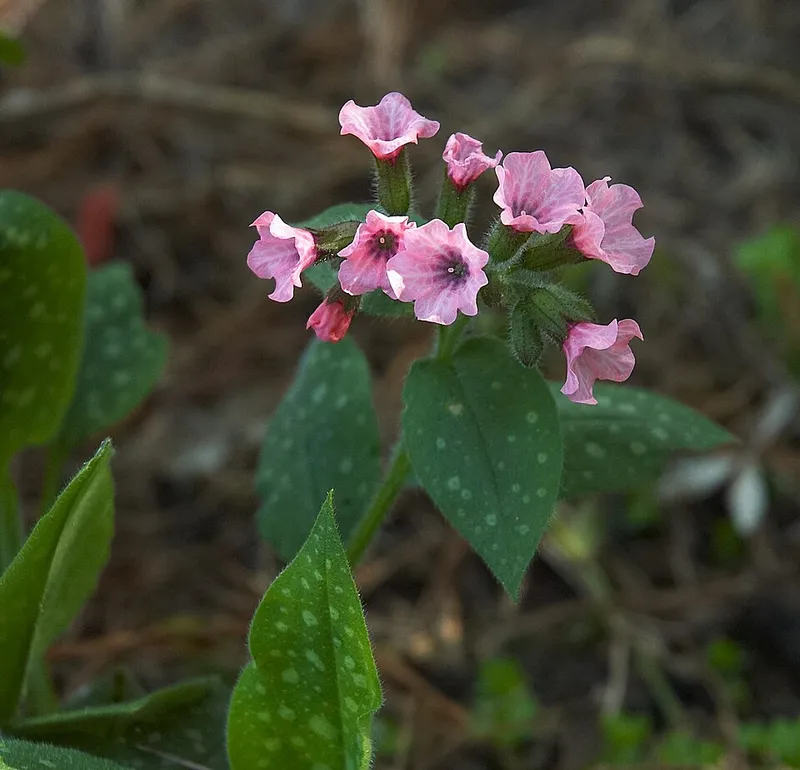
10-18 inches tall by 18-24 inches wide; blooms in early spring (March-April in Middle Tennessee) with funnel-shaped flowers that open pink and mature to blue-violet on the same plant; silver-spotted dark green foliage is the primary ornamental feature through the growing season; spreads slowly by rhizome.
Divide clumps every 4-5 years in early fall to refresh vigor.
Native region: Not native to Tennessee; ornamental introduction from central and southern Europe.
Pulmonaria saccharata is one of the earliest-blooming perennials in the Middle Tennessee shade garden and among the most distinctive for its white-spotted foliage. The primary cultural challenge in the humid zone 7a climate is powdery mildew, which typically appears on older foliage in late summer, established practice is to shear the entire plant to the ground after midsummer, which forces clean new foliage for fall. Select mildew-resistant cultivars such as 'Majeste' or 'Trevi Fountain' when available. Unlike many shade perennials, pulmonaria is a good companion for Polystichum acrostichoides (Christmas Fern) and spring bulbs, as its bold spotted foliage covers bulb senescence effectively.
Quick Facts
- Common Name
- pulmonaria
- Scientific Name
- Pulmonaria saccharata
- Plant Type
- Perennial
- Region
- Middle Tennessee