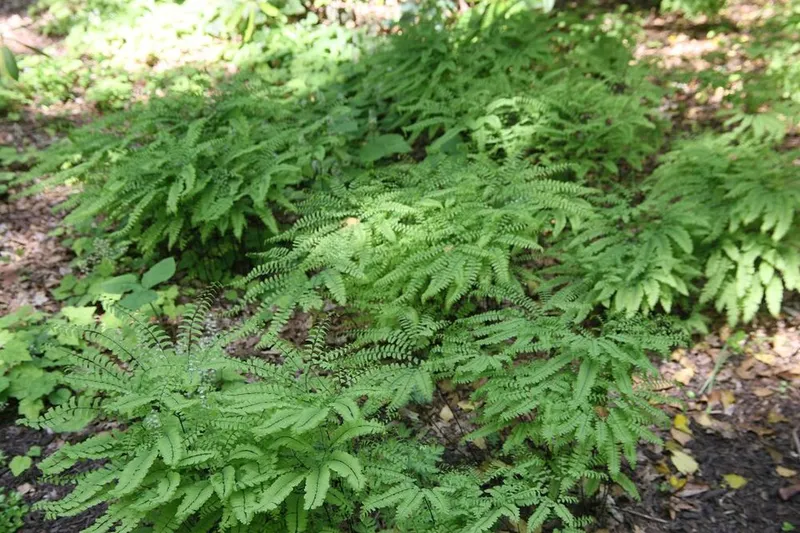
About Northern Maidenhair
Northern Maidenhair (Adiantum pedatum)
Maidenhair Fern, Five-fingered Fern
Part shade to full shade; medium to moderately moist moisture; rich, humusy, well-drained soil; moderately acid to neutral pH.
12-24 inches tall; fronds are distinctively fan-shaped with wiry black stems (stipes) and pale green leaflets arranged in a horseshoe pattern; deciduous, dies back completely in winter; spreads slowly by creeping rhizomes.
Germination from spores is possible but slow; division in early spring is the standard propagation method. Remove old fronds in early spring before new croziers emerge.
Native region: Statewide in Tennessee in moist, rich woodlands, ravines, and rocky slopes, particularly common in Middle and East Tennessee.
Northern maidenhair fern is native to the moist hardwood forests of Middle Tennessee and is one of the most distinctive ferns for shaded gardens, the horizontal, fan-shaped frond architecture is immediately recognizable and unlike any other common shade plant. It requires consistently moist soil and fails quickly in dry shade or compacted clay; planting in an enriched, well-amended bed with organic matter is necessary in most Columbia-area garden soils. The black wiry stems remain attractive even as fronds age. Deer do not typically browse ferns. Goes fully dormant after frost, leaving a clean break, leave the rhizomes undisturbed overwinter.
Quick Facts
- Common Name
- Northern Maidenhair
- Scientific Name
- Adiantum pedatum
- Plant Type
- Perennial
- Region
- Middle Tennessee