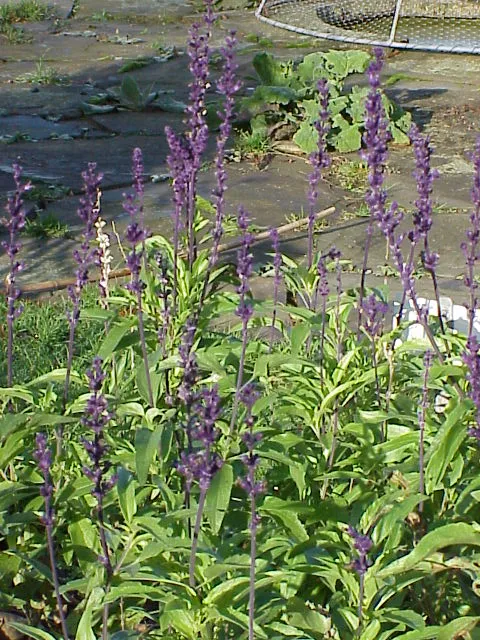
About Mealycup Sage
Mealycup Sage (Salvia farinacea)
Blue Sage, Mealy Blue Sage
Full sun, medium to moderately dry moisture, well-drained loam to sandy soil; performs poorly in heavy wet clay, adequate drainage is the primary site requirement.
2-3 feet tall by 1-2 feet wide; blooms late spring through frost with dense spikes of violet-blue flowers on white-mealy (farinose) stems; primarily grown as an annual in northern zones but functions as a short-lived perennial in Zone 7a; spreads by self-seeding where drainage is adequate.
Native region: Not native to Tennessee; ornamental introduction from Texas and northern Mexico.
Salvia farinacea is commonly used in commercial landscape plantings across Middle Tennessee but performs inconsistently in the heavy clay soils of the Columbia area without raised beds or amended planting sites. The species is native to calcareous soils of the Texas Hill Country and tolerates alkaline conditions that stress many other salvias. Attracts hummingbirds, sphinx moths, and bumblebees (Bombus spp.) throughout its long bloom period. The cultivars 'Victoria Blue' and 'Henry Duelberg' are the most widely available; 'Henry Duelberg' is a wild-collected selection with stronger perennial behavior in Zone 7.
Quick Facts
- Common Name
- Mealycup Sage
- Scientific Name
- Salvia farinacea
- Plant Type
- Perennial
- Region
- Middle Tennessee