About Cinnamon Fern
Cinnamon Fern (Osmunda cinnamomea)
Part shade to full shade, moderately wet to wet moisture, tolerates heavy clay soils; requires consistent soil moisture and does not tolerate prolonged drought.
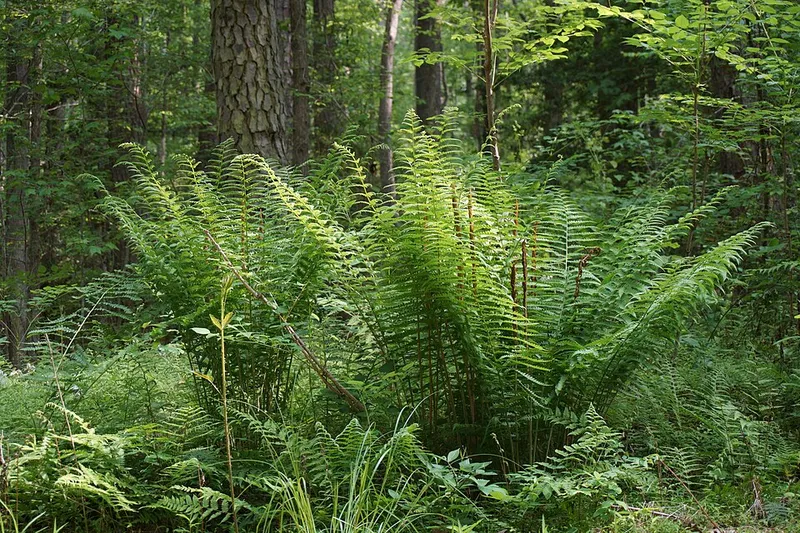
2-3 feet tall by 2-3 feet spread; fertile fronds emerge in spring covered in cinnamon-brown woolly spore masses, the source of the common name, and die back after spore release; sterile fronds persist through the growing season; spreads slowly by rhizome to form vase-shaped clumps.
Native region: Statewide in Tennessee, common in moist woodlands, streambanks, and seeps across the Highland Rim and Cumberland Plateau.
One of the most architecturally distinctive native ferns available for Middle Tennessee landscapes. The fertile fronds emerging in early spring add visual interest before the sterile fronds fully expand. Unlike Osmunda regalis (Royal Fern), the cinnamon fern stays compact enough for residential shade gardens. In the clay soils typical of the Columbia area, amending the planting bed with organic matter markedly improves establishment. Wool from the fiddleheads has historically been used by birds as nesting material. Propagate by division in early spring; large clumps can be divided into sections with a sharp spade.
Quick Facts
- Common Name
- Cinnamon Fern
- Scientific Name
- Osmunda cinnamomea
- Plant Type
- Perennial
- Region
- Middle Tennessee