About catmint
Catmint (Nepeta x faassenii)
Full sun, dry to medium moisture, well-drained loam or sandy soil; tolerates light clay if drainage is adequate; pH 6.0-7.5.
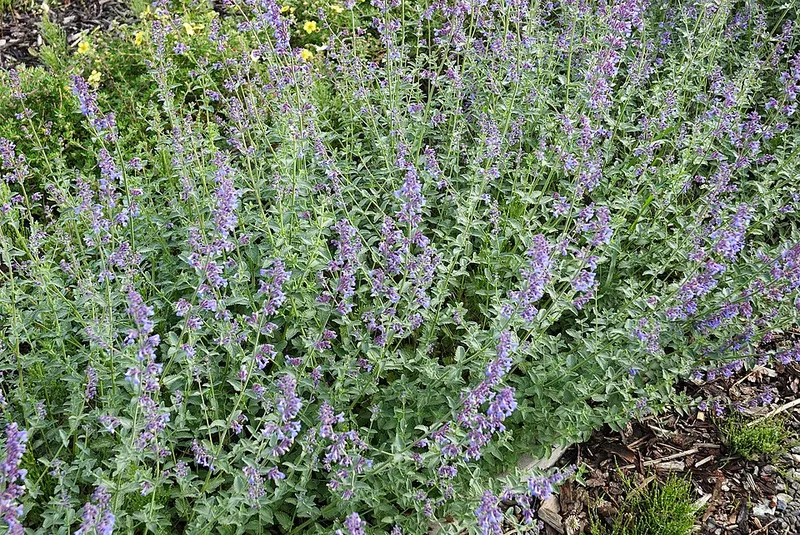
1-2 feet tall by 2-3 feet wide; blooms late spring into early summer (May-June in Middle Tennessee) with lavender-blue flower spikes on grey-green aromatic foliage; deadheading or shearing by one-third after the first flush typically produces a second bloom in late summer; spreads by stem layering; a sterile hybrid that does not self-seed.
Native region: Not native to Tennessee; Nepeta x faassenii is a sterile hybrid of N. racemosa and N. nepetella, both native to the Mediterranean and central Asia.
Catmint is one of the more drought-tolerant ornamental perennials available for the front-of-border position in Middle Tennessee. The sterile hybrid nature prevents the weedy self-seeding common in N. cataria (true catnip). The cultivar 'Walker's Low' (which is not particularly low-growing) is the most widely sold and most reliable performer in Zone 7 climates. Like lavender, catmint struggles in wet clay; raised planting beds or slopes with amended soil improve performance. Deer typically avoid it. Shearing after bloom prevents the open, floppy habit that develops when plants go to seed and refreshes foliage for summer.
Quick Facts
- Common Name
- catmint
- Scientific Name
- Nepeta x faassenii
- Plant Type
- Perennial
- Region
- Middle Tennessee