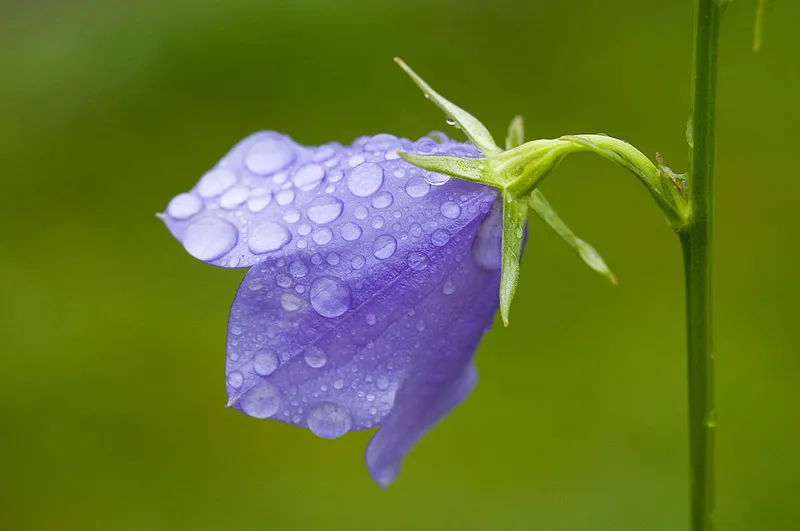
About campanula
Campanula (Campanula persicifolia)
Peach-leaved Bellflower, Willow Bellflower
Full sun to part shade, medium moisture, well-drained loam; tolerates light clay if drainage is adequate; pH 6.0-7.5.
2-3 feet tall by 1 foot wide; blooms in early summer (June-July in Middle Tennessee) with open cup-shaped violet-blue or white flowers on slender upright stems; spreads by self-seeding to maintain a persistent stand; clumps are short-lived but seedlings fill gaps reliably.
Propagation by seed sown in fall; established plants self-seed freely.
Native region: Not native to Tennessee; ornamental introduction from Europe and western Asia.
Campanula persicifolia is the most reliable bellflower species for Middle Tennessee, outperforming the more commonly sold C. carpatica (Carpathian Harebell) in summer heat. The upright habit and long bloom season make it a useful mid-border plant. High humidity in Middle Tennessee summers promotes powdery mildew on the foliage after bloom, shearing spent stems back and providing good air circulation reduces incidence. Slugs are a common pest in shaded, moist planting areas; iron phosphate bait is effective when slug damage appears in spring. The white-flowered form (C. persicifolia f. alba) is equally heat-tolerant and pairs effectively with blue salvias and yellow achilleas.
Quick Facts
- Common Name
- campanula
- Scientific Name
- Campanula persicifolia
- Plant Type
- Perennial
- Region
- Middle Tennessee