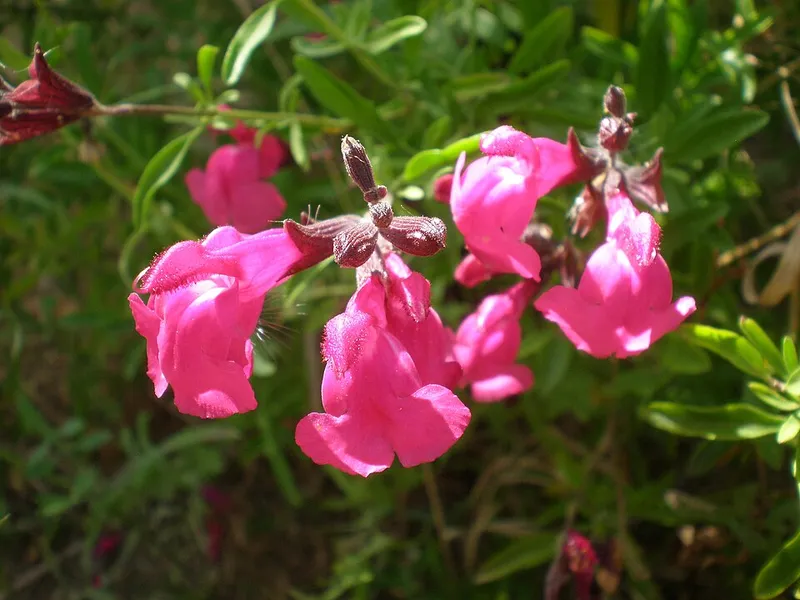
About Autumn Sage
Autumn Sage (Salvia greggii)
Gregg's Salvia, Cherry Sage
Full sun, dry to moderately dry moisture level, well-drained soil, does not tolerate wet feet; tolerates rocky and poor soils; neutral to slightly alkaline pH.
2-3 feet tall and wide, blooms spring to frost in two main flushes (May-June and September-November in Middle Tennessee) with red, pink, coral, or white tubular flowers; semi-woody at the base.
Cut back by one-third in midsummer after the first bloom flush to promote the fall rebloom; hard pruning to 4-6 inches in late winter removes winter-killed wood.
Native region: Not native to Tennessee; ornamental introduction from the Chihuahuan Desert, Texas and northern Mexico.
Autumn sage is one of the most reliable hummingbird perennials for Middle Tennessee, with the fall bloom flush coinciding with the September hummingbird migration. Native to a semi-arid climate, it demands sharp drainage and struggles in the heavy clay soils common around Columbia without amendment or raised planting. In Zone 6b, plants may die back completely in severe winters and should be mulched at the crown after hard frost; Zone 7a sites typically allow semi-evergreen persistence. Avoid high-nitrogen fertilization, it promotes foliage at the expense of bloom. Deer-resistant due to aromatic foliage.
Quick Facts
- Common Name
- Autumn Sage
- Scientific Name
- Salvia greggii
- Plant Type
- Perennial
- Region
- Middle Tennessee